 EXCLUSIVE MEMBERS ONLY ACCESS
To access this month’s edition & Member’s only resources, enter your registered email address.




Newcastle, New South Wales
The Results of the August 2021 census were made public on 12th July 2022, and revealed that Australia has become a majority migrant nation, as the census data shows for the first time that more than 50 per cent of residents were born overseas or have an immigrant parent.
Australia’s 2025 Migration Program has been carefully designed to boost the social and economic outcomes that meet Australia’s needs. In fact, the migration programme was first launched in 1945 following the aftermath of World War 2. Given this long history, it is worth understanding how it works. The Australian Immigration Bulletin exists to help explain this in more detail.
As we’ve entered the 12th month of the year, join us for a look at the latest news and developments in the world of Australian Immigration!
“The first 9 months of 2025 saw the highest number of net permanent and long-term arrivals than any other year on record,” said Daniel Wild, Deputy Executive Director of the Institute of Public Affairs.
Today, IPA analysis of the Australian Bureau of Statistics’ updated Overseas Arrivals and Departures database, with the reference period to September 2025, shows:
“Elevated net permanent and long-term arrival numbers have now become a new normal, with the indicator of migration patterns showing the federal government’s ‘Big Australia’ policy is well and truly in full flight,” said Mr Wild.
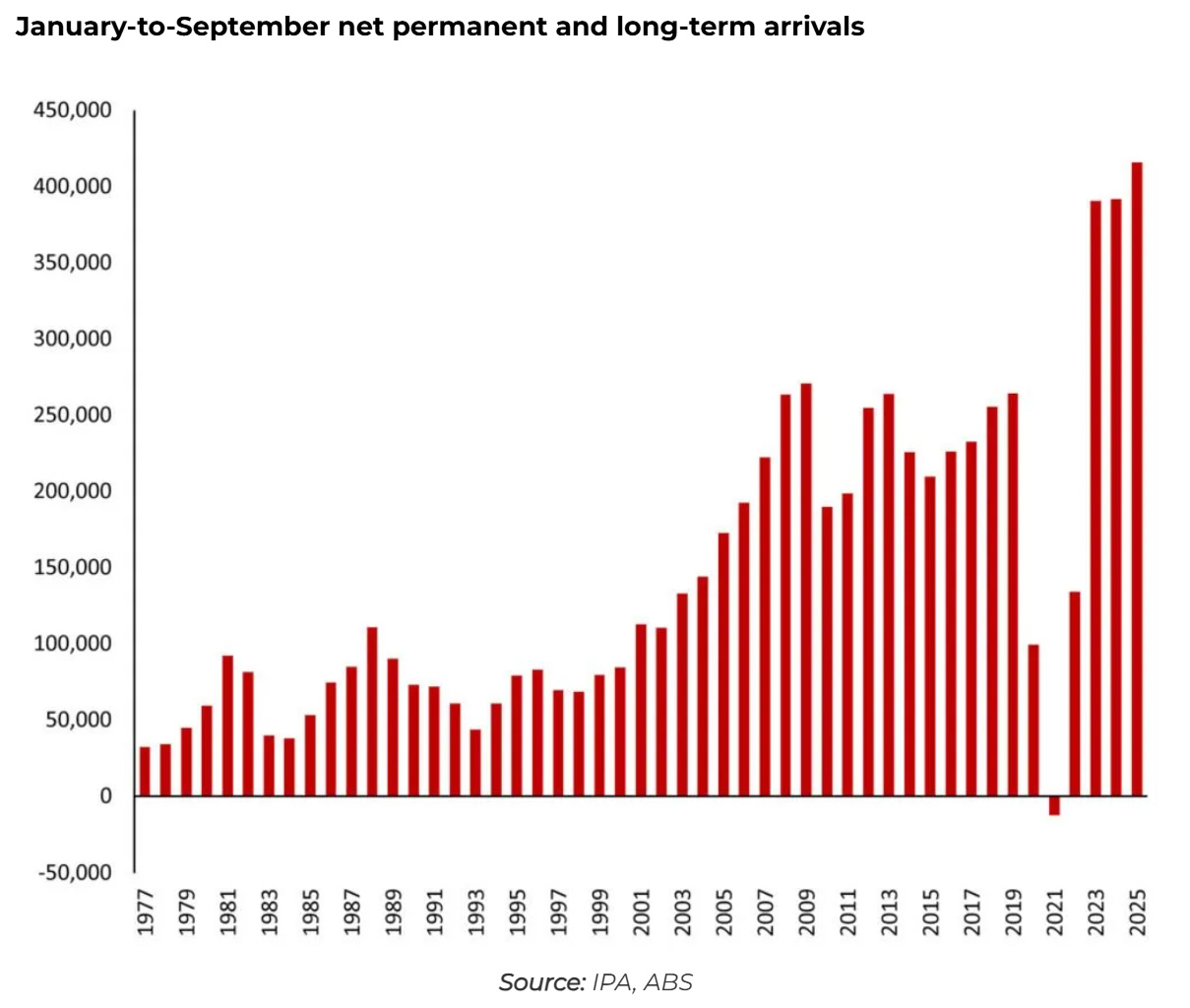
“Post-pandemic net migration has already more than made up for the fall in net migration during the pandemic years. In fact, it is now gradually replacing the natural increase component of population growth since natural increases have been lower than pre-pandemic expectations,” said Mr Wild.

Australia’s immigration system continues to attract millions of applicants from around the world, driven by its strong economy, high living standards, and stable political environment.
Whether for skilled migration, education, or long-term settlement, the country’s appeal remains consistently strong, even as policies and requirements evolve.
Experts say that Australia’s popularity is closely linked to its unique combination of lifestyle and opportunity. Major cities such as Sydney, Melbourne, Brisbane, and Perth regularly rank among the world’s most liveable places, offering clean environments, efficient public services, and competitive job markets. The country’s multicultural identity also makes it easier for newcomers to integrate and feel welcomed.
The cornerstone of Australia’s immigration system is the skilled migration program, which operates through a points-based structure. Applicants receive points based on age, qualifications, language proficiency, and work experience. This system allows Australia to attract workers in industries that face labor shortages, including healthcare, engineering, information technology, construction, education and more.
Immigration advisers note that competition is growing, especially for occupations with limited yearly quotas. Processing times can vary significantly depending on demand, documentation quality, and changes to government priorities.
Students represent another major group shaping Australia’s immigration landscape. With universities consistently ranked among the best globally, tens of thousands of international students choose Australia each year. Many see education as a pathway to long-term residency through post-study work visas and employer sponsorship. This system creates a natural pipeline from education to employment, benefiting both students and the Australian economy.
Australia’s regional migration programs are also gaining attention. To encourage population growth outside major cities, the government offers additional points and incentives for applicants willing to live and work in regional areas. Towns and smaller cities benefit from new talent, while migrants gain access to faster application pathways and job offers.
Environmental factors also shape the immigration narrative. Australia’s climate challenges — including bushfires and droughts — influence long-term planning and highlight the need for skilled workers in sustainability, agriculture, and emergency management.
Despite these complexities, analysts agree that Australia will remain a top destination for immigrants. The country’s economic stability, demand for skilled professionals, and globally recognized lifestyle continue to outweigh the challenges of the application process.
As global talent mobility accelerates and more people seek safe, prosperous environments to build their future, Australia’s immigration system is expected to remain one of the most influential and closely watched models in the world.

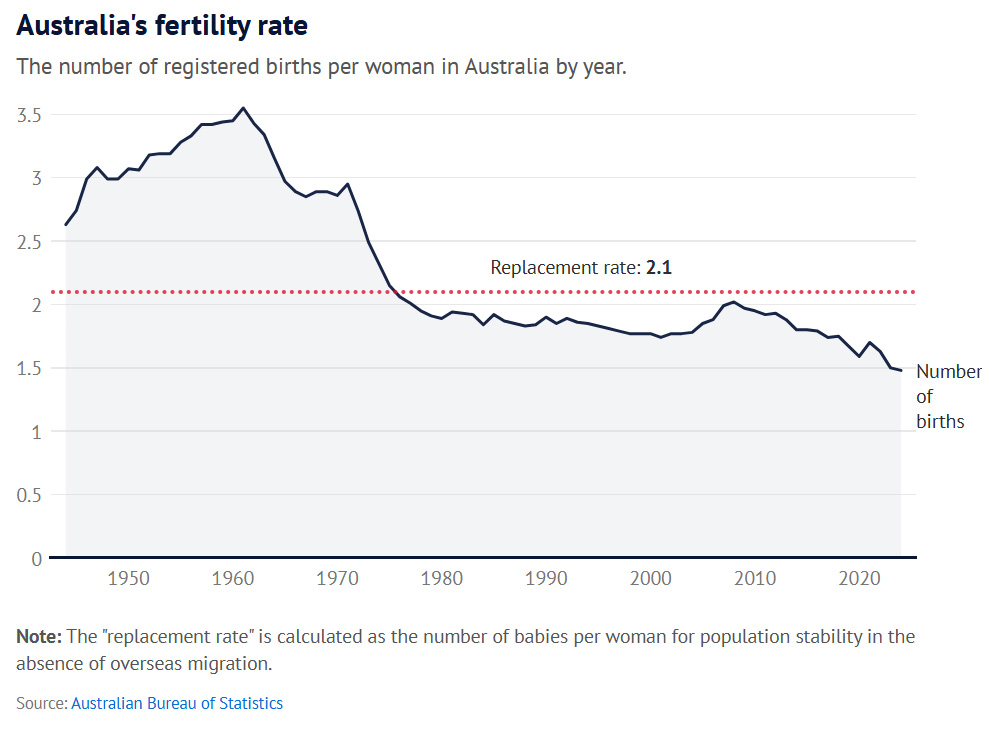
Australia’s fertility rate has collapsed to its lowest level on record, forcing the country to rely more heavily on immigration to expand the population as parents increasingly choose to have children when they are older.
Data released by the Australian Bureau of Statistics on Wednesday showed that the fertility rate fell to 1.48 births per woman: the lowest rate since records began in 1921, despite the 292,318 registered births in 2024 being an increase of 1.9 per cent on 2023.
Since 2019, fertility rates – the average number of children born to a woman over her lifetime – have fallen sharply in every state and territory. In the ACT the rate has dropped to a nation-low of just 1.27, putting it among the lowest fertility rates in the world, while the number of recorded births in NSW fell to its lowest level in 20 years.
The replacement rate, which is the average number of registered births per woman needed to maintain – or replace – a country’s population over time without migration, is 2.1 births per woman.
The country’s net overseas migration level in 2024 was 341,000 people, down 37 per cent from its peak of 538,000 in 2022-23.
Social media content creator Domenica Calarco, 32, had thought she would be pregnant before she turned 30, but it was only seven weeks ago that she had her first child, Dove. Calarco has said she and former partner Jarod Bogunovich, 36, will be co-parents.
Calarco, who was a freelance make-up artist before appearing as a contestant on Married at First Sight in 2022, said that only after moving into a house on her parents’ property and earning a steadier income through social media was she able to think about having a baby.

Domenica Calarco had her first child at 32, having thought she would start her family in her 20s.
The median age of parents has continued a slow but steady climb over the past decade, and was 32.1 years for mothers and 33.9 years for fathers in 2024.
ABS head of demography Beidar Cho said the shift towards older parenthood reflected broader social changes and economic shifts, including more time spent in higher education, along with higher workforce participation by women.
“It also shows evolving patterns in how and when people choose to start families compared to previous generations,” she said.
Despite now feeling more settled, Calarco said she had no immediate plans to have more children.
“I’m one of three children, so when I was younger, I thought I’d have two or three myself at least,” she said. “But I think the reality of raising children in 2025 is that it’s so much more expensive. I’d probably need a bigger car, I would need more room in my house, and then I think about how I want to raise my daughter … giving her the things that I didn’t have.”
Pelin Akyol, research manager for the e61 think tank, said Australia’s declining fertility rate was driven by three factors: later parenthood, parents having fewer children, and a rising share of people without children.
“The most significant of those is parents having fewer children, leading to smaller average family size,” she said.
The number of registered births from 2023 to 2024 fell across most states and territories, with WA recording the biggest fall of 4.7 per cent.
Victoria recorded the largest increase at 12.9 per cent, but the bureau noted this was due to an improvement in birth registration processing times in 2024 following a period of delays.
The birth rate in NSW fell 3.4 per cent from 90,000 in 2023 to just under 87,000 in 2024: the lowest figure in 20 years, partly due to an increase in birth registration processing times.
The median age of mothers was highest in the ACT at 32.8 years, while the median age of fathers was highest in Victoria at 34.4 years.

For New Zealand citizens, the net migration loss was 46,400 in the September 2025 year, driven by a record departure of 72,700 New Zealanders — primarily to Australia.
New figures show Australian visitor arrivals surged over the past year — while migration data shows a record number of New Zealanders leaving.
Stats NZ said visitor arrivals from across the Tasman reached 1.48 million in the year ended September, up from 1.33m the year before.
Stats NZ said it was the second-highest number of Australian visitor arrivals after 2019, pre-pandemic.
“The increase in visitor numbers from Australia in the September 2025 year coincided with an increase in flights between Australia and New Zealand, and a Tourism New Zealand marketing campaign from early 2025 targeting the Australian market,” Stats NZ international travel statistics spokesperson Bryan Downes said.
Overall, visitor arrivals were 3.43m for the year, an increase of 197,000 from the prior year.
Aside from Australia, the biggest increases were from the United States, the United Kingdom and Japan.
Record number of NZers leave the country, again
Stats NZ also released migration data, showing annual net migration gains were 12,400 in the year ended September, compared to a net gain of 42,400 in the same period last year.
For New Zealand citizens, the net migration loss was 46,400 in the September 2025 year, driven by a record departure of 72,700 New Zealanders — primarily to Australia.
Stats NZ said 26,300 New Zealand citizens arrived in the period.
Net migration gains for non-New Zealand citizens were 58,800, reflecting 112,600 arrivals and 53,800 departures.
For migrant arrivals the biggest groups were New Zealand citizens, followed by China, India and the Philippines.

If you are interested in applying for a general skilled migration visa to Australia, it is important to have a good understanding of the skilled visa options and how the migration points test works, so that you can maximise your chances of being eligible to apply for a skilled visa.
A general skilled migration visa is an option available to skilled workers who are seeking to qualify for a skilled visa independently, or under a state or family sponsorship. It is an alternative to an employer sponsored visa.
One of the key criteria to qualify for a general skilled migration visa is the points test (a criterion that does not apply to employer sponsored visas). This is often the most challenging aspect for prospective skilled visa applicants to overcome when seeking an invitation to apply for the relevant skilled visa.
If you are considering applying for a general skilled migration program visa, an important concept to understand is the Expression Of Interest (EOI).
If you are considering applying for a general skilled migration visa, it is important to be aware that for certain visas in this visa class, you will first be required to lodge an EOI with the Department of Home Affairs (the Department) through SkillSelect. The EOI is not a visa application, but rather, it is the process by which you can express your interest in applying for the relevant skilled visa (It’s important to note, that there is NO fee to submit an EOI).
This requirement applies to the following skilled visa subclasses:
Let’s take a brief look at each of these visas below:
The ‘subclass 189’ is a federal sponsored visa that grants automatic permanent residence in Australia. It is subject to nil visa conditions or obligations. For this reason, it is often considered to be the most flexible of the skilled visa options available.
A subclass 189 points-based visa allows you to live and work in any state or territory permanently.
The ‘subclass 190’ is a state/ territory sponsored permanent residence visa. It is another points-based visa for which invitations are issued throughout each month by individual states and territories. One of the benefits of applying for state nomination is that you will be granted an additional 5 points.
An important aspect to consider, which does not apply to the subclass 189 visa is that there is an added step in the application process. In this case, you must also apply for nomination approval to a state or territory government. Only upon receipt of an invitation from the relevant state or territory to which you apply can you then apply to the Department for the visa itself.
Your obligations as a subclass 190 visa holder are that you must commit to your nominating jurisdiction’s obligations and commit to residing in your nominating State or Territory for two years from visa grant.
The ‘subclass 491’ is also a points-based state/ territory (or family) sponsored visa. It is a regional visa with a term of five years. The Department issues invitations for family sponsored EOI applications only (in invitation rounds). Invitations for state sponsorship are issued by individual states and territories throughout each month. This will grant you an additional 15 points for the nomination.
Being a provisional visa, this means it provides a pathway to permanent residence in Australia with the Subclass 191 Permanent Residence (Skilled Regional) visa, subject to meeting specified requirements.
Be mindful that as a subclass 491 visa holder, you must abide by visa condition 8579, which requires you to live, work and study in a designated regional area of Australia. For migration purposes, most locations of Australia outside of major cities (Sydney, Melbourne, Brisbane, Perth, etc.) are classed as regional areas.
If your EOI is successful, you will receive an invitation to apply for the visa, as specified in the invitation letter. This then enables you to proceed with lodgement of your visa application (provided you meet all other visa lodgement and visa grant requirements).
Please note, the below State and Territory program updates is a general overview only. It does not take into account any of your personal circumstances. You must check the State/Territory information carefully to ensure you can meet all the requirements for nomination.
Australia is currently facing a shortage of skilled migrants to fill workforce demands. In response, states and territories have been easing the conditions of their visa programs to help attract skilled workers from overseas.
Below is the monthly update for some of the State and Territory opportunities available.
Program Status Update
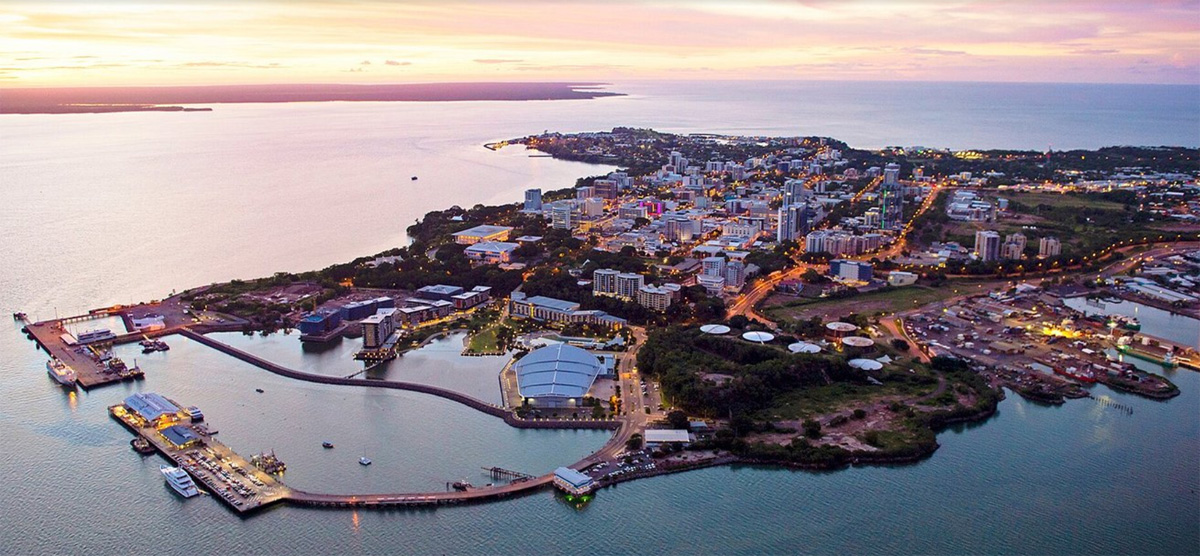
UPDATE: NT General Skilled Migration (GSM) nomination applications for 2025-26
The NT Government has now received full allocations for the 2025-26 program year from the Australian Government.
The NT Nomination application portal is intended to be opened by 24 November 2025 to new applications for all onshore and offshore streams. Before applying, please ensure that you have reviewed the eligibility criteria. For information on how to submit an application, view how to apply.
Please note that the NT government cannot guarantee nominations before visa deadlines. Those who are onshore and have visas expiring should seek professional advice from a Registered Migration Agent or Legal Practitioner on their visa options and ensure that they remain lawful in Australia.
Once the above mentioned temporary suspension is lifted, you may be able to proceed with the NT’s usual skilled migration program. Program details below:
People residing offshore are eligible to be considered for Northern Territory (NT) nomination. Invitations to apply for Northern Territory nomination will be via the ranking system.
The ‘Northern Territory Offshore Migration Occupation List’ identifies the occupations in current demand in the Northern Territory. This List is important if you want to apply for Northern Territory nomination for either a:
The ‘Northern Territory Offshore Migration Occupation List’ is only applicable for those applying for NT nomination from outside Australia, under the Priority Occupation stream.
Please note: The Northern Territory government has advised that offshore applicants will generally only be offered a Northern Territory nomination for a subclass 491 visa. Subclass 190 nominations will only be offered in exceptional circumstances, such as cases where the applicant has strong connections to the NT.
The NT advises eligible applicants to apply as soon as they meet the eligibility criteria. To receive a nomination from the NT Government, you must:
Before submitting an EOI for The Northern Territory, applicants should check that they meet all eligibility requirements.
For a further explanation, see the Frequently Asked Questions page on the Northern Territory Government website.
Program Status Update
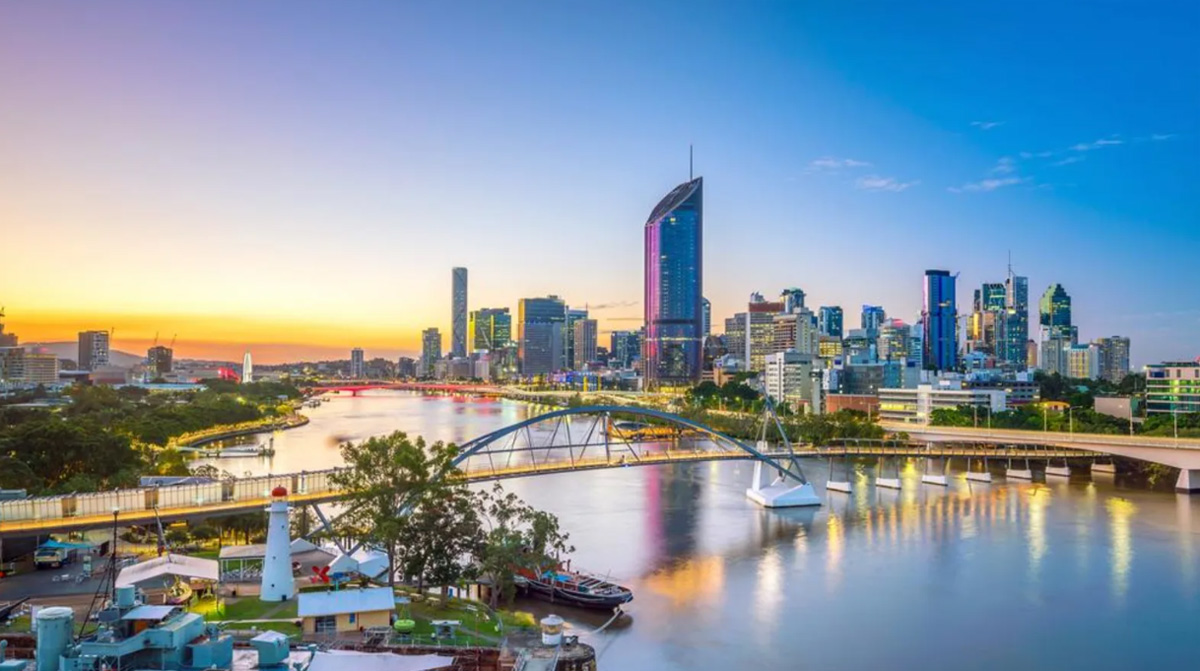
Program Status Update: Important Announcement
On 2 September 2025, the Australian Government announced the total number of places in its 2025-26 Migration Program. But it is still finalising state and territory allocations.
Queensland will not open the 2025-26 State Nominated Migration Program until our final program allocation is confirmed.
You can however submit your Registration of Interest (ROI) for Queensland nomination from 19 September 2025, in preparation for the program opening.
In the meantime, take a look here at which skilled visas and pathways might best suit you, including instructions for how to apply for Queensland nomination.
Once the above mentioned temporary suspension is lifted, you may be able to proceed with Queensland’s usual skilled migration program. Program details below:
Depending on your occupation and situation, there are two state nomination options available for skilled migrants through Queensland.
For Queensland state nomination, prospective applicants must meet the Department of Home Affairs requirements, state-specific occupation requirements and have skills in an occupation that is available on the Queensland Skilled Occupation List.
You may undertake employment once onshore in Queensland through:
Offshore applicants meeting the minimum published requirements are eligible to lodge an Expression of Interest (EOI) on Skill Select and then a Registration of Interest (ROI) on the Migration Queensland portal.
Migration Queensland has closed the 2024-25 State Nominated Migration Program. For more information, please see here.
Migration Queensland criteria requires you to:
The 2024-25 Skilled Migration Program is open to both onshore and offshore applicants and provides pathways for skilled workers, graduates, and small business owners.
Before submitting a Registration of Interest (ROI) for Queensland, applicants should check that they meet all eligibility requirements.
Note: In the EOI, select ‘Queensland’ as the only state of interest in the EOI, if you wish to be considered for an invitation to apply for Queensland nomination.
For a further explanation, see the Frequently Asked Questions page on the Queensland Government website.
 Program Status Update
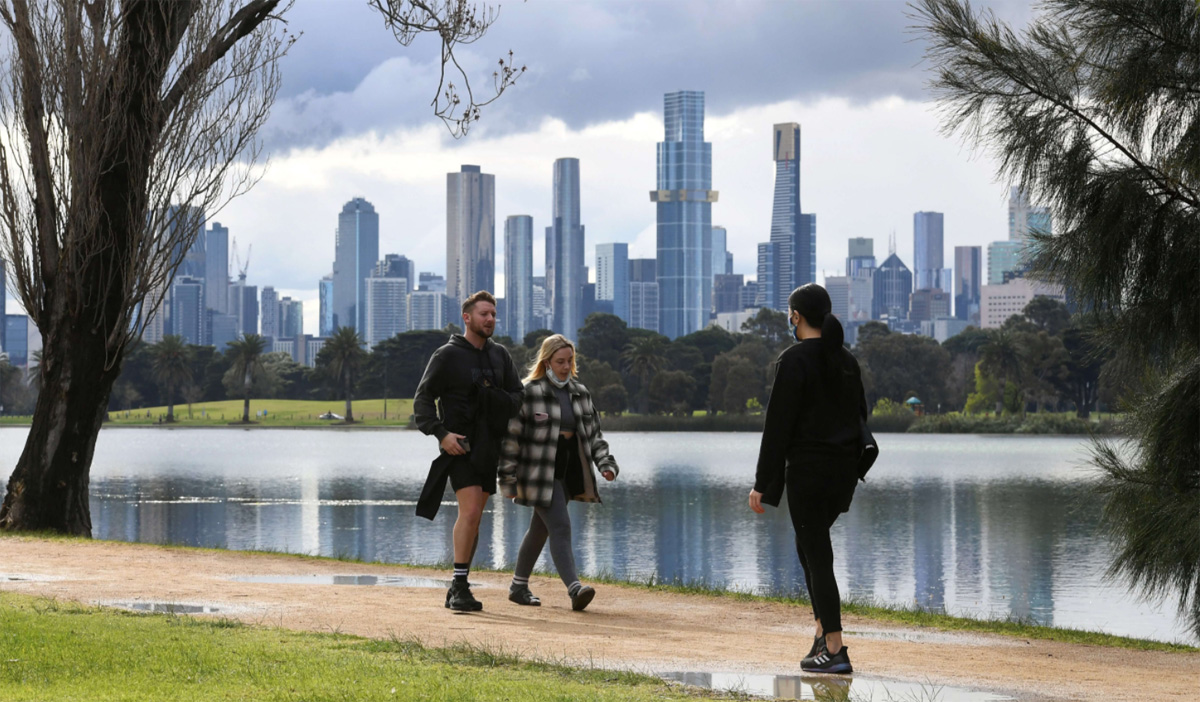
The Australian Government’s Department of Home Affairs has provided Victoria a small interim allocation for the 2025-26 program year. Victoria’s full allocation for the 2025-26 program is expected to be confirmed by the Department of Home Affairs in the coming weeks.
Full details of Victoria’s 2025-26 program will be published once the Australian Government provides Victoria with its full visa allocation.
In the meantime, take a look here at which skilled visas and pathways might best suit you, including instructions for how to apply for Victoria nomination.
Once the above mentioned temporary interim allocation is lifted, you may be able to proceed with Victoria’s usual skilled migration program. Program details below:
Open to offshore applicants, the program provides skilled migrants with a pathway to permanent residency in Victoria. The skills that successful applicants bring to Victoria benefits employers and the broader Victorian economy.
The program provides two visa pathways:
As with previous years, applicants will first need to submit a Registration of Interest (ROI) and then be selected on competitive merit to apply for visa nomination.
*Please note: Invitation rounds occur frequently throughout the financial year with no set date.
To be invited to apply for Victorian skilled visa nomination, you must firstly make or update an Expression of Interest (EOI) via the Australian Government’s SkillSelect and then submit a Registration of Interest (ROI).
NOTE: If you previously submitted a ROI and wish to be considered for invitation in the 2024-25 program, you must submit a new ROI.
Both onshore and offshore applicants are eligible to submit a Registration of Interest (ROI) for both the subclass 190 and subclass 491 visas.
Your ROI will remain in the system for selection until it is withdrawn, selected or the program year ends.
Before submitting an ROI for Victoria, applicants should check that they meet all eligibility requirements.
For a further explanation, see the Frequently Asked Questions page on the Victoria Government website.

Program Status Update
Update: 2025-26 State Nomination Migration Program Interim allocation
A small interim allocation has been issued for the 2025–26 Western Australia State Nominated Migration Program (SNMP). This allocation will be used to clear the remaining 2024–25 applications.
Given the limited number of places, the 2025–26 program year will not open until the formal allocation is issued by the Commonwealth Government.
Please continue to monitor the State Nominated Migration Program page and other official channels for further updates.
Once the above mentioned temporary suspension is lifted, you may be able to proceed with WA’s usual skilled migration program. Program details below:
People residing offshore are eligible to be considered for Western Australia (WA) State nomination. Invitations to apply for WA State nomination will be via the ranking system.
The Western Australian Skilled Migration Occupation List identifies the occupations in current demand in Western Australia. This List is important if you want to apply for Western Australia nomination for either a:
Please note that to be eligible for an invitation in the WA State Nominated Migration Program, you must meet both:
Before starting your application, you will need to check whether your occupation is available on either the WA Skilled migration occupation list (WASMOL) Schedule 1 or 2, or the Graduate occupation list. You can search for your occupation here. (The occupation list search bar is located under the heading ‘Eligible Occupations’.)
Features of the WA 2024-25 State Nominated Migration Program:
Before submitting an EOI for Western Australia, applicants should check that they meet all eligibility requirements.
For a further explanation, see the Frequently Asked Questions page on the Western Australia Government website.
Program Status Update
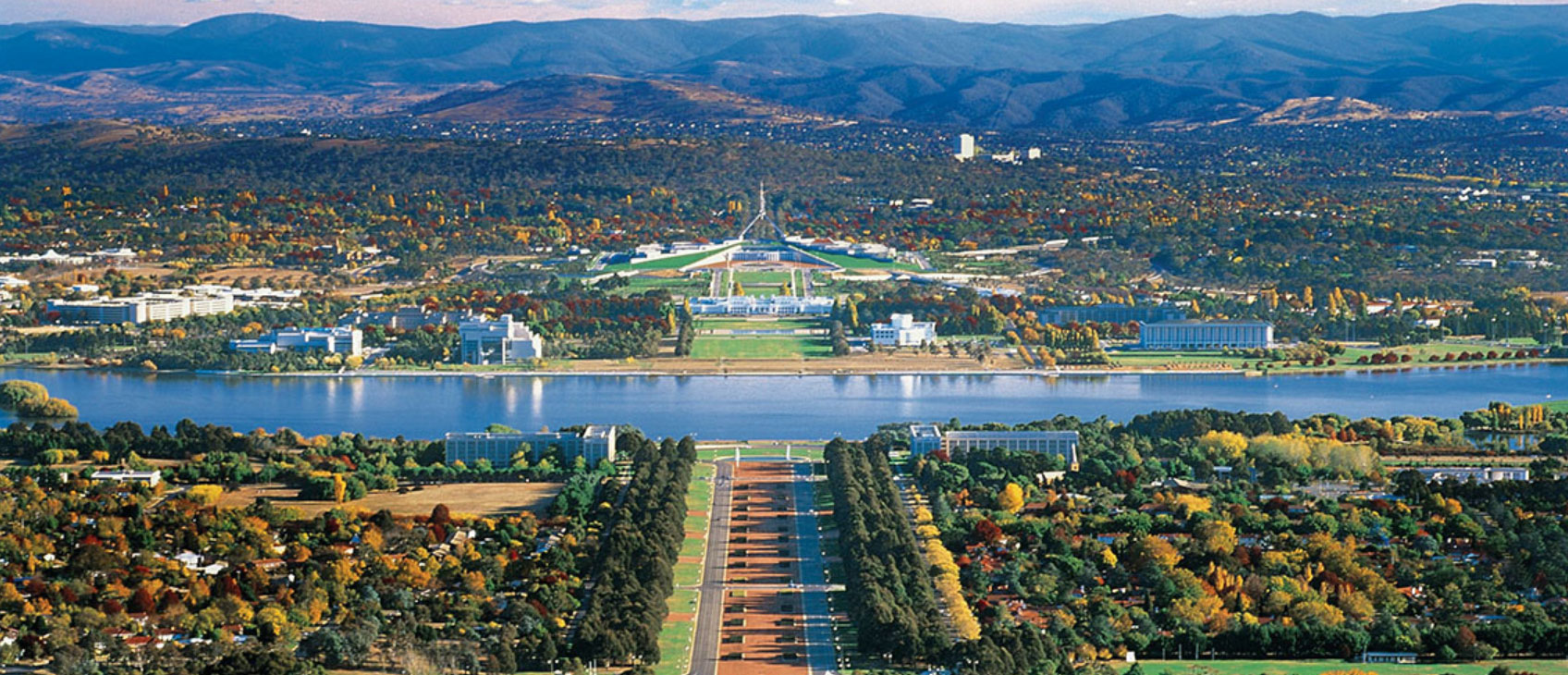
2025-26 Nomination Allocation: The ACT has received a final nomination allocation of 1,600 places for the 2025-26 program year.
The ACT Critical Skills List identifies the occupations in current demand in the ACT. This List is important if you want to apply for ACT nomination for either a:
The ACT Government will update this list every four months to make sure that the ACT Skilled Migration Program adapts and responds to the evolving critical skills needs of the ACT economy.
The Canberra Matrix is weighted to ensure that applicants who will make a positive economic contribution to the Territory and/or have demonstrated a genuine commitment to the ACT are more likely to be ranked and invited to apply for ACT nomination.
*ACT nomination does not guarantee a migration outcome. You must still meet the Department of Home Affairs criteria.
Every month, a certain number of nomination invitations are available (prorated on the annual allocation) to those working in the highest ranked Matrix in each occupation.
You can view the ACT’s most in-demand skills for skilled migration by consulting the ACT Nominated Migration Program Occupation List.
Before submitting an EOI for The Australian Capital Territory, applicants should check that they meet all eligibility requirements.
Once you’ve submitted a valid Department of Home Affairs Skill Select EOI, follow the ACT Government Process to apply for ACT nomination.
For a further explanation, see the Resources page on the ACT Government website.
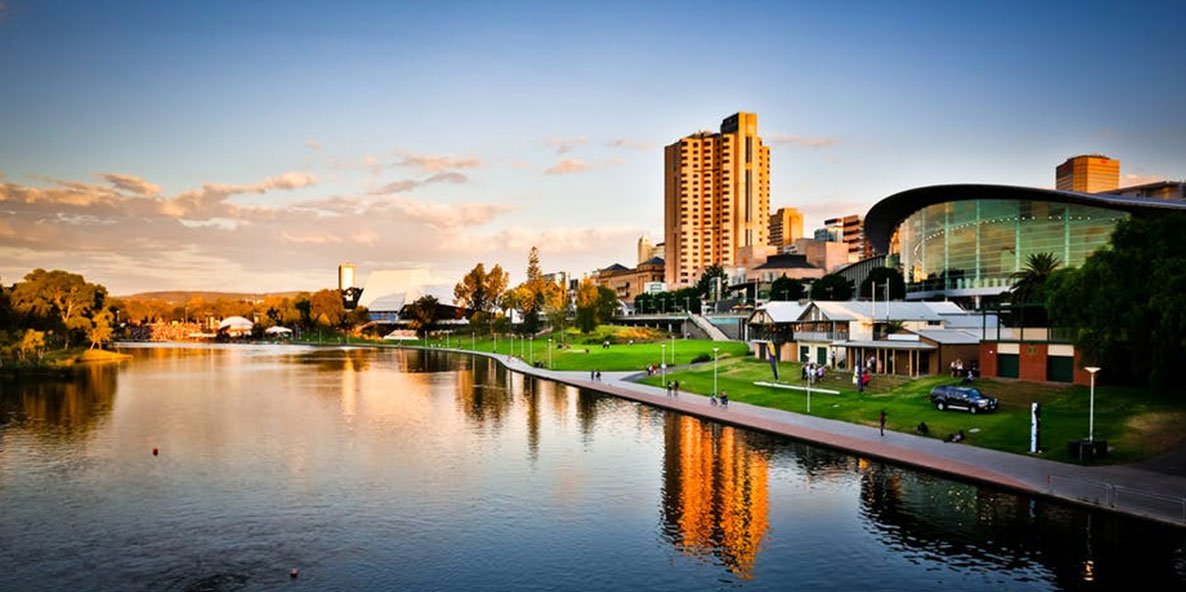
Program Status Update
An Update on Interim Allocations for the 2025-26 Program Year
The Commonwealth Government have provided South Australia with a small interim allocation for the 2025-26 program year.
Given the small number of interim allocations, Skilled and Business Migration (SBM) will not open for new Registration of Interest (ROI) applications and instead focus on inviting strong applicants contributing to the state’s workforce requirements, including from the ROI’s submitted in the 24-25 program year.
Once the Commonwealth Government provides South Australia with its full allocation, SBM will release its full policy settings for the upcoming program year.
Please keep an eye out on the News & Events section of their website to keep up to date with all the announcements.
Once the above mentioned temporary suspension is lifted, you may be able to proceed with SA’s usual skilled migration program. Program details below:
Depending on your occupation and situation, there are two state nomination options available for skilled migrants through South Australia.
For South Australian state nomination, prospective applicants must meet the Department of Home Affairs requirements, state-specific occupation requirements and have skills in an occupation that is available on the South Australian Skilled Occupation List. Offshore applicants meeting the minimum published requirements can now lodge an Expression of Interest (EOI).
There is an enormous range of occupations on South Australia’s Skilled Migration Occupation List in a range of industries – search for your occupation here.
South Australia will select offshore applicants to apply for state nomination from those who have submitted an Expression of Interest (EOI) through SkillSelect. Offshore applicants will not need to lodge a Registration of Interest (ROI) for this year’s program. South Australia will be nominating offshore applicants from over 250 occupations on South Australia’s Skilled Migration Occupation List.
If you are currently residing offshore and seeking to move to South Australia, the first step is to create an Expression of Interest (EOI) in SkillSelect ensuring you select South Australia as your first preferred State or Territory.
The South Australian Government can then review your EOI for consideration under the Skilled Nominated (Permanent) visa (subclass 190) or Skilled Work Regional (Provisional) visa (Subclass 491).
For most occupations, applicants must have a minimum of three years of skilled employment in their nominated or related occupation within the last 5 years to secure an invitation to apply for SA nomination.
South Australia will be assessing candidates on merit by the following factors:
For occupations in the construction trades (as listed here) applicants must have a minimum of one year of skilled employment in their nominated or related occupation within the last 3 years.
Applicants in the construction trades will be assessed on merit by the following factors:
Before submitting an EOI for South Australia, applicants should check that they meet all eligibility requirements.
For a further explanation, see the Frequently Asked Questions page on the South Australia Government website.
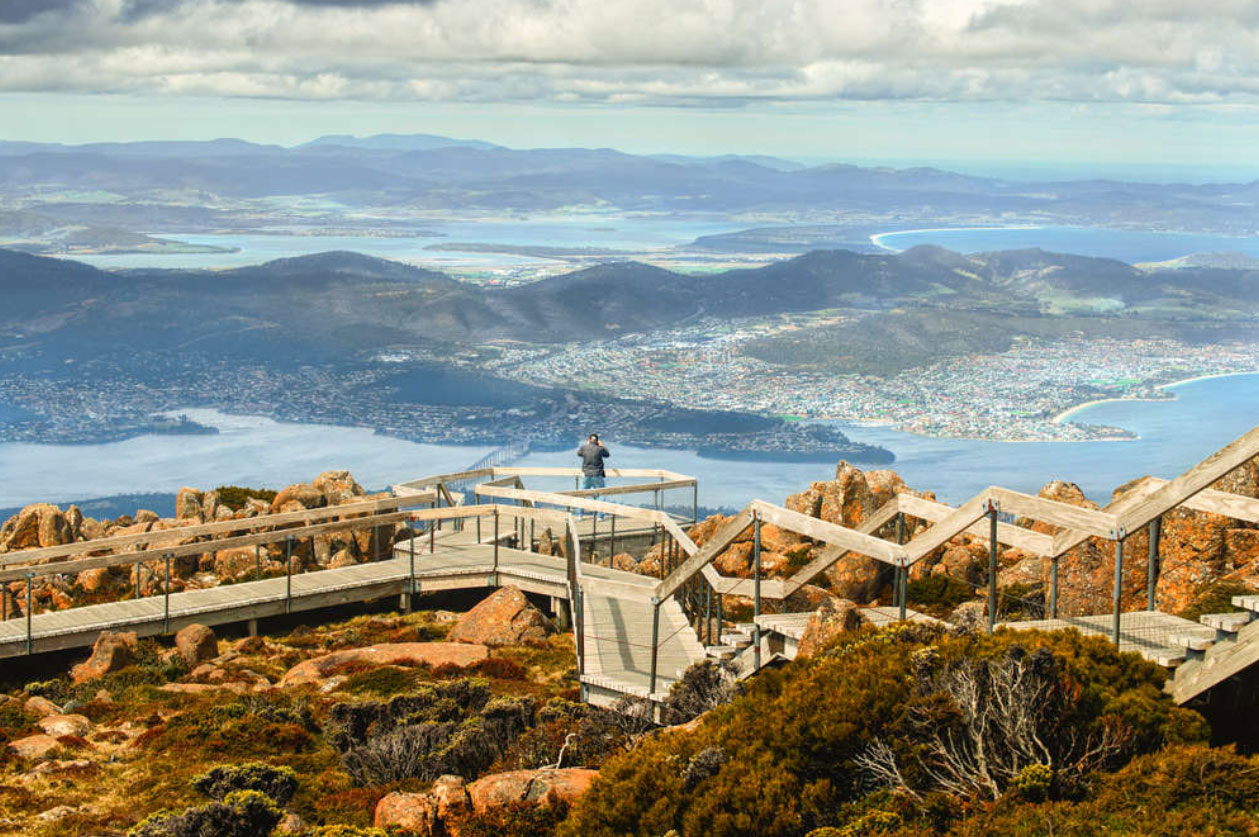
Program Status Update
Program Update – November 2025 – Full Nomination Allocation Received
Migration Tasmania has received our full allocation from the Australian Government and has commenced inviting ROIs on a weekly basis.
Tasmania has now received its full nomination allocation for the 2025-26 program year.
In total, including interim allocations, this comprises:
Migration Tasmania has now commenced weekly invitations to apply for nomination.
Information will be posted on the Migration Tasmania website every week detailing:
Program Changes and New Features
Following analysis of program outcomes and stakeholder feedback, updates have been made to improve the application process, clarify requirements and priorities, and manage program risks.
Key changes include:
Detailed information about the changes can be found HERE
Candidates who have submitted an ROI in the last six months may wish to withdraw it and submit a new one, as the changes to priority attribute ranking criteria may significantly improve chances of selection.
Processing times and remaining nomination quota are updated every week on the Migration Tasmania website HERE
Working in Tasmania
The two state nomination options available for skilled migrants through Tasmania are:
The Tasmanian State Nomination Skilled Migration Program supports Tasmanian businesses and increases the state’s working age population. It does this by attracting and retaining migrants with skills genuinely in need by employers, or with the capacity to settle in Tasmania through skilled employment in the long-term, and business activities that will increase employment opportunities.
Tasmania’s skilled migration program is for people wanting to move to the state who have skills that Tasmania need. Skilled migrants are attracted to Tasmania because of the state’s enviable lifestyle, career opportunities, affordable housing, reputable schools and a globally recognised university.
The Migration Tasmania Application Gateway is now available for registrations of interest (ROI) and applications for skilled visa nomination from Tasmania.
Anyone seeking Tasmanian nomination for a Subclass 190 Skilled Nominated Visa or Subclass 491 Skilled Work Regional Visa must first register in the Migration Tasmania Application Gateway .
Before submitting an ROI for Tasmania, applicants should check that they meet all eligibility requirements for either;
For a further explanation, see the Frequently Asked Questions page on the Tasmania Government website.
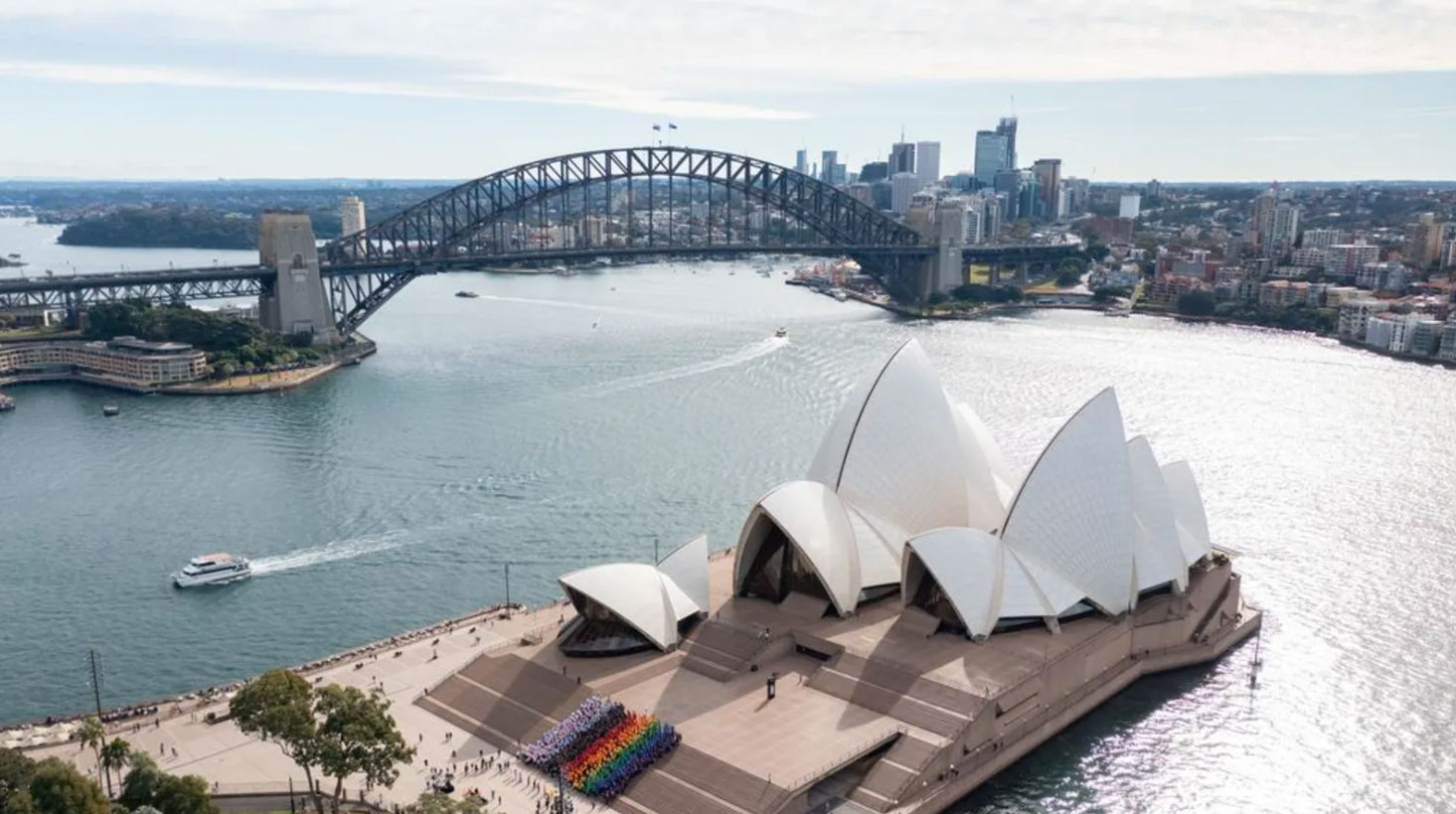
Program Status Update
The New South Wales government has invited applications from offshore migrants under the following nomination streams:
The NSW State Government announced that offshore applicants skilled in certain ANZSCO unit groups are eligible for NSW nomination.
*Please note: Invitation rounds occur frequently throughout the financial year with no set date.
NSW invites and nominates SkillSelect EOIs at the ANZSCO unit group level. To be eligible for NSW nomination (for either Subclass 190 or Subclass 491), your occupation must fall within an ANZSCO unit group identified on the NSW Skills List which reflects skills in high demand across the state, and be eligible for the visa.
Before submitting an EOI for New South Wales, applicants should check that they meet all eligibility requirements for either;
For a further explanation of how the skills list works, see the Common questions about skilled visas page on the NSW Government website.
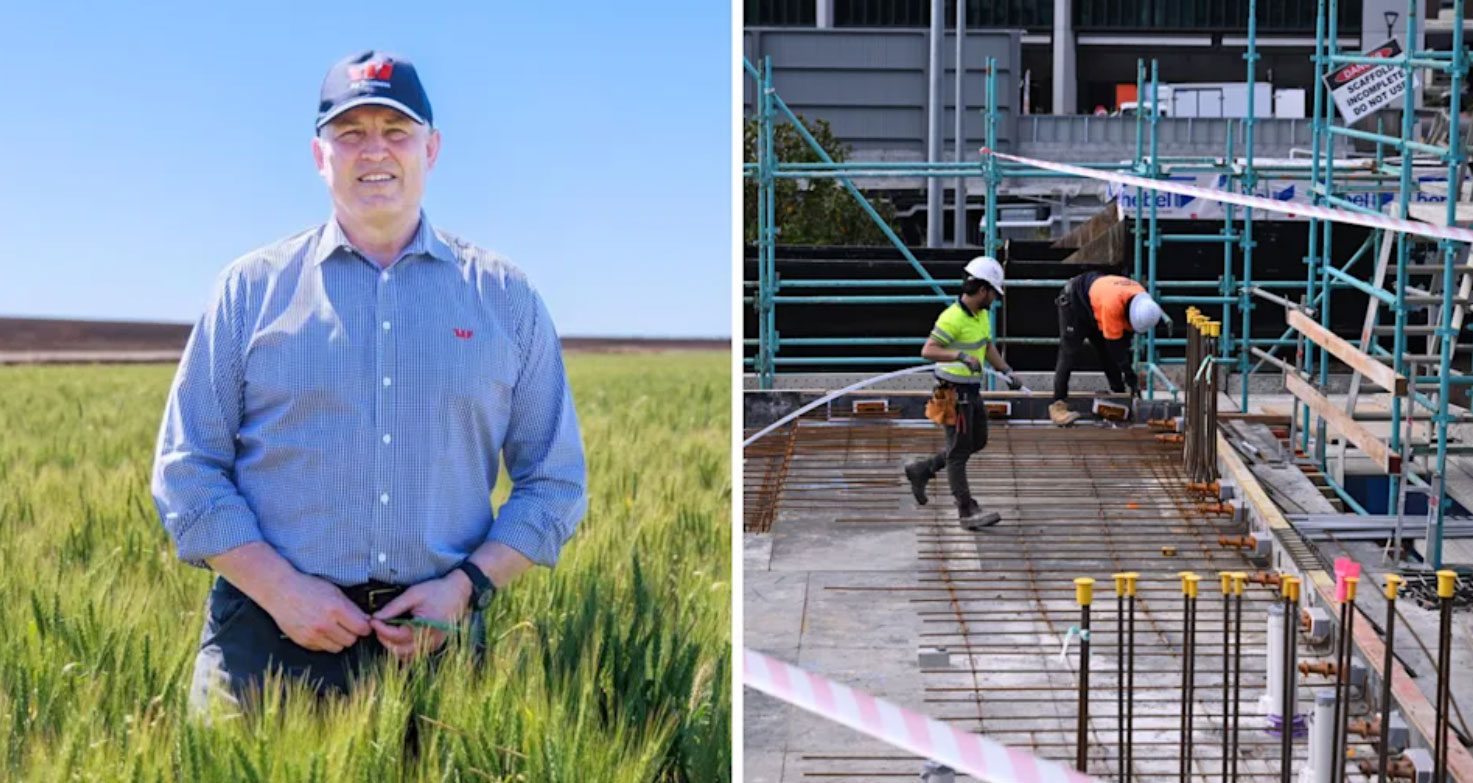
The boss of Australia’s second biggest bank has called for skilled migrants to be prioritised to address the country’s housing shortage.
Westpac boss Anthony Miller has called for skilled migrants to be prioritised to tackle Australia’s housing shortage. The Australian government has a target of building 1.2 million new homes by 2029, but there are fears this won’t be achieved given major labour shortages.
Miller said there was a possible solution “staring us in the eye”, which was to get “more properties built in regional Australia” and get skilled migrants in. The major bank CEO told The Herald Sun the regions made sense for property development programs.
“That’s great nation building … Get the right immigrants in, get the right resources allocated, create enormous amounts of jobs and create this self-fulfilling outcome over the next five or 10 years,” he said.
Australia needs to clear regulation and harness “moonshot” ambition in attracting capital and talent from overseas.
It comes after Westpac on Monday reported a $6.9 billion net profit after tax for the year, a 1 per cent drop. The bank also announced it has sold its RAMS home loan business, which holds $21.4 billion in mortgages.
About a quarter of construction workers are from overseas
Master Builders Australia has estimated that a quarter of the country’s construction workforce are migrants. But numbers are dwindling, with only 5 per cent of new entrants in the past five years being from overseas.
Master Builders Australia CEO Denita Wawn said “Harnessing the skills of overseas-trained workers is critical to addressing Australia’s housing issues.
According to the Department of Home Affairs, some 15,524 skilled visas were granted to workers in the construction sector in the 2025 financial year. This was the highest in the last 10 years.
Recent figures from the Australian Bureau of Statistics found Australia had fallen more than 60,000 homes short of its target during the Housing Accord’s first year.
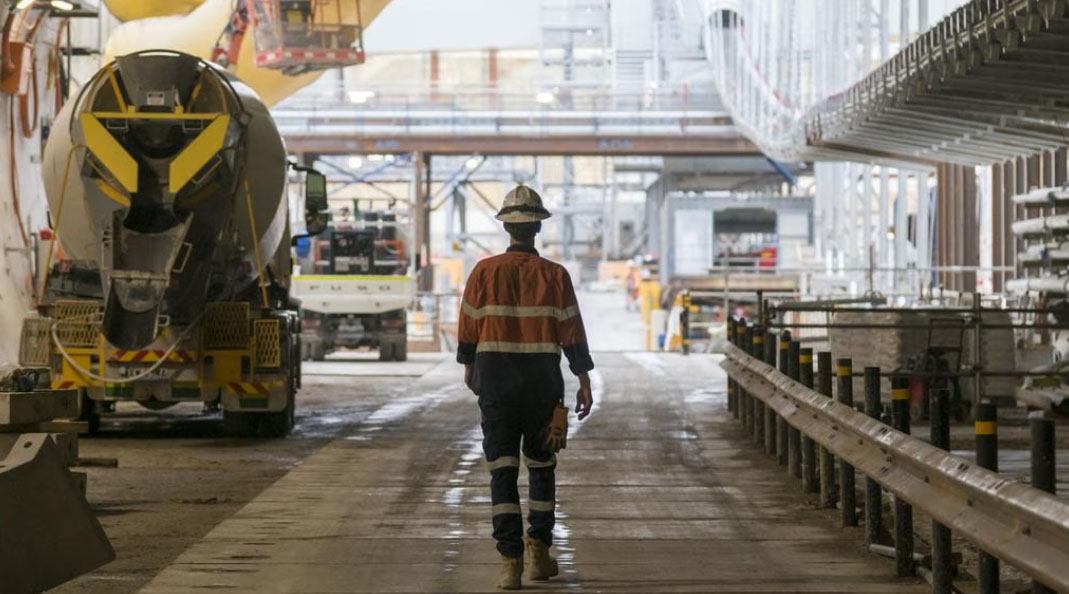
Prime minister Anthony Albanese’s infrastructure manager says Australia faces a shortfall of 300,000 skilled construction workers by 2027 that would delay delivery and inflate costs.
Infrastructure Australia is now pleading for the Albanese government to speed up reforms for skilled visas and incentivise companies to invest in modular construction.
IA, which was set up by the Prime Minister when he was infrastructure minister in the Rudd government, says the five-year major public infrastructure pipeline has grown 14 per cent in a year to $242bn, driven by government housing and energy projects.
While it says growth in material costs are running at about 5 per cent, a shortage of workers is the greater danger. “Labour remains the most critical delivery risk,” IA chief executive Adam Copp said. “After a brief easing in 2024, shortages are projected to surge and could reach 300,000 workers by 2027. The consequences are very simple. It will cost more or be delivered later.”
IA estimates about 10 per cent of the infrastructure pipeline bill worth about $20bn is from schedules changing: “In other words, time blowing out. That also usually comes with costs blowing out.”
Australia’s major public infrastructure pipeline is now $242bn across the five years from financial year 2025 to 2029, up 14 per cent compared with last year’s forecast for the five-year period of FY24 to FY28.
“This outcome reflects governments’ ambitions to boost housing stock and transition our energy sources towards a net-zero future,” IA said in its report.
It notes “governments across Australia are putting significantly more investment into transmission … Transmission projects now account for $15bn across the five-year outlook, up from $4bn the year before. Similarly, investment into social and affordable housing as part of the Major Public Infrastructure Pipeline has increased and is now $28bn, up from $17bn.”
“When also considering smaller capital projects, there are six out of eight jurisdictions that have increased their investment into housing,” it said.
The Reserve Bank reported this month that capacity constraints, in particular housing construction, could lead to higher than expected inflation. Under one key risk scenario, the RBA noted: “We would expect new dwelling inflation to rise sharply as capacity pressures in housing construction increase.”
Deputy governor Andrew Hauser has pointed to capacity pressures potentially leading to higher inflation and an end to interest rate cuts.
IA noted that the increased shortage of workers was going to be “driven by the rise in demand for privately funded renewable energy projects”, further calling into question whether the level of investment required to meet annual net-zero goals would be met.
Mr Copp said the solution to the worker shortage would be reform to visas, a focus on building up skills domestically and incentives for modular construction that would lift productivity.
“We think we need to focus on developing our homegrown skills, attracting more people into the sector, making it a great place to work; migration settings should be on the table as a consideration for a number of key roles,” he said.
“We’re also calling for governments to collaborate more specifically on delivering modern methods of construction, and … to think about how they can incentivise the sector to step up and deliver some of this innovation.
“There is an opportunity for modern methods of construction to manufacture components of the infrastructure. So you might standardise bridges or particular concrete casting.”
IA expects the peak workforce demand will hit 521,000 by 2027, a significant increase from last year’s peak demand forecast of 417,000 in 2026.
The shortage of engineer, architect and scientist roles will peak at 126,000 in late 2026, before gradually declining over the outer years to 2028-29. The shortage for trades workers and labourers will also peak at 126,000, but by mid-2027. There will also be sustained demand for project management professionals, projected to peak in mid-2027 at 59,000.
IA said the shortages of engineers, designers and experienced project directors were already “constraining capacity in emerging sectors like energy, data centres, defence and water.”
“Firms are prioritising projects strategically, with many adopting a ‘wait and see’ approach on energy projects due to slow progress and delayed investment.”
More than 60 per cent of firms surveyed in IA’s annual report said labour cost were either a significant or major threat to delivery of their infrastructure projects.
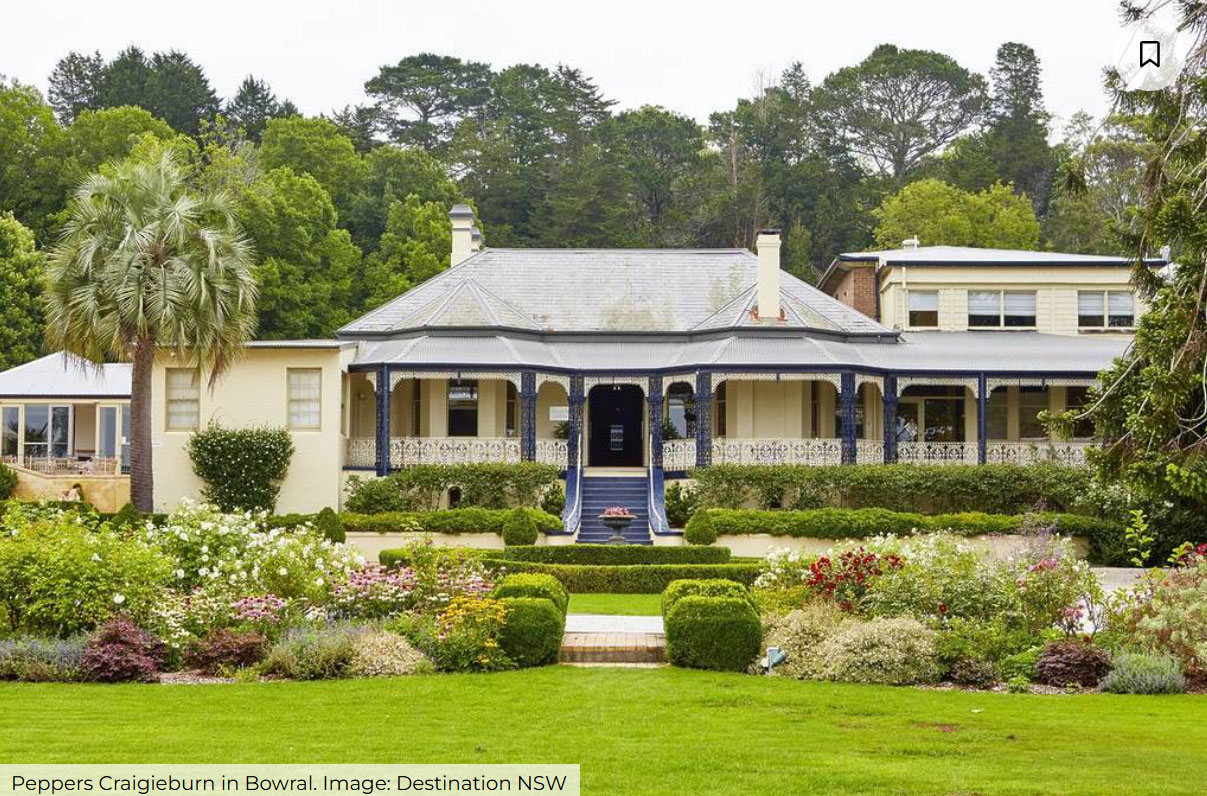
Bowral’s charming streets and serene landscapes offer a fairytale-like escape, with plenty of artsy spots and hidden gems to explore.
The word “fairytale” gets thrown around a lot, but some places really do fit the bill. The Southern Highlands is home to several small towns and villages, with streetscapes right out of a storybook and plenty of old-world charm, from Berrima to Mittagong. The one that easily enchants crowds all year round is Bowral, thanks to its Victorian-style houses, beautifully manicured gardens, and vintage shops and cafes that give it a cosy vibe no matter the season. And it’s not just us saying it; global travel publisher World Atlas recently ranked Bowral among the most fairytale towns in NSW. Keen to see why? Here’s how to plan the picture-perfect trip to Bowral this summer.
Things to do in Bowral this summer
Bowral comes alive in the spring and summer months, offering a wonderful mix of outdoor, family-friendly, and laidback activities. Sun-kissed landscapes now take centrestage with plenty of lovely spots to explore under the sun. For most visitors, a stroll through Bowral’s charming main street is the perfect starting point. Lined with boutique shops, cafes, and antique markets, it’s the best way to get a taste of the town’s character. Bradman Museum is a tailor-made spot for all things cricket, and the charming bookshops around town are a huge draw too.
Looking to savour a few moments of peace and quiet? Head to Lake Alexandra for lovely waterside views. The warmer days make it ideal for picnics and lakeside walks, and you can also consider fishing or a bike ride around the surrounding tracks. For more wholesome summertime adventures, head to the Farmers Market, held on the second Sunday of each month, and find a stacked variety of stalls and vendors selling everything from fresh local produce to handmade goods, artisanal treats, baked goods, and more.
While the town itself offers plenty of storybook adventures, the verdant region is an escape for city dwellers, and nature lovers will love exploring all the nearby attractions. Mt Gibraltar provides stunning views of the highlands and valleys, whether you tackle the hike up or take a leisurely road trip to the top. The surrounding trails are perfectly pleasant for summer walks beneath shady trees. No visit to Bowral would be complete without a trip to Fitzroy Falls. This stunning waterfall offers scenic views, native wildlife, and a serene escape, just a short drive from town.
Where to eat and shop in Bowral
Wondering what else you can do around town? Other must-see highlights include Dirty Janes Antique Emporium, the go-to spot for antique lovers hunting for a one-of-a-kind piece or simply soaking in the old-world atmosphere. Also, add hidden gem Fairground Follies to your list, a unique museum with carousels, pianolas, and a 1930s video juke box.
While it’s tempting to while away your entire day outside, Bowral is also home to some fantastic cafes and eateries. To live out your Bridgerton dreams, make a beeline for Your Vintage Occasion and get your pinkies up for an elegant high tea or a decadent lunch. Harry’s on Green Lane is a repeat visit for out-of-towners and locals, but a few equally cool local gems to add to your list include Nick’s for great coffee and pastries, Rush Roasting Co for expertly crafted brews, Franquette Creperie for flavourful crepes, and Raw and Wild organic market and cafe for health-conscious meals.
For something more refined, Bistro Sociale dishes out quality European cuisine, while Onesta Cucina specialises in Italian delicacies. Ethos Restaurant offers an intimate dining experience, and Centennial Vineyards is a Tuscany-like escape with fine dining and even better wine.
What is the best time to visit Bowral?

The country town offers something special in every season, so when you plan your visit depends on personal preference. Spring is when the gardens burst with colourful blooms and host the popular Tulip Time flower festival, while the summer months bring a lively atmosphere with outdoor activities, busy markets, and vibrant local festivals. Autumn is also a popular time to visit the Southern Highlands for spectacular colours and mild temperatures.
Getting there
Bowral is easily accessible from Sydney and Canberra, making it an excellent day trip or weekend destination. From Sydney, it’s around a 1.5-hour drive via the M5 and Hume Highway, and you can also catch a direct train from Central to Bowral and reach the town in under 2 hours. From Canberra, it’s roughly a 2-hour drive.
Short on time? Here are the highlights:
A year ago, the Australian government introduced a policy called Ministerial Direction 111 (MD111) with the stated goals of restricting the number of new international students arriving in Australia and improving the integrity of the country’s international education sector. Ministerial Directions are not laws per se, but they are legally binding for the sector or government agencies they are intended to influence.
MD111 is not a formal cap on new student visas. Its design relies heavily on prioritising visa applications from “low-risk” origin countries (i.e., in which students are more likely to be “genuine” and not using the student visa route to enter the labour force) and for institutions with proven capacity to handle more students. It has had the effect, however, of establishing a “soft” enrolment cap by limiting visa processing for individual institutions once they have exceeded an allocated number of new student spaces. This was enough to exert significant downward pressure on new international enrolments. Student applications have fallen by over 26% as of 2025, and commencements are down by 16% compared with 2024.
The government is pleased with this evidence of what it calls “managed growth,” with the Hon Julian Hill, Assistant Minister for International Education and Assistant Minister for Citizenship, Customs and Multicultural Affairs saying, “Throughout 2025 we have seen the positive effect of a managed growth approach across the sector – returning student numbers to a more sustainable level.”
A wider “slow lane” for visa processing
Now, there is Ministerial Direction MD115, which on 14 November 2025 will replace MD111. MD115 is intended to further the goals of MD111 and to reinforce the government’s 2026 National Planning Level (NPL) for international student places announced in August 2025.
The NPL sets a recommended total allocation of 295,000 seats for new international students in 2026, up moderately from 270,000 in 2025. Two thirds of the 2026 total goes to public universities. Each provider, across sectors, has a set number of allocations (called New Overseas Student Commencements, or NOSCs) for new international students. Providers have been told they will receive at least as many allocations for 2026 as they did in 2025.
Together, the NPL and MD115 will:
The capacity milestones used to determine visa processing speed are:
How can visa processing speed controls act as “soft caps”?
Uncertainty about how fast their visa applications will be processed has a profound effect on international student applicants. Students encountering delays on visa decisions can be disrupted in many ways, including:
Slower visa processes also affect the operations of institutions. They can make enrolment management even more challenging, weakening the ability of admissions staff to estimate numbers of (1) visas that will be granted, (2) prospects who get frustrated and choose another destination, and (3) students who will defer because their visa decision has not happened in time for their programme start date.
Suffice to say, the difference between knowing your visa will likely be approved within three weeks versus three months is massive for many international students. Timing is so influential in terms of students’ ability to prepare for and finance study abroad, and it is equally consequential for institutions attempting to manage capacity and programme mix.
As a result, the Australian government’s leverage of visa processing times is proving effective in terms of encouraging compliance within the international education sector. If the goal is improving the integrity of the system as much as it is controlling international student volumes, stratifying visa processing times is likely as effective as the fixed “hard caps” we see in place in Canada. It is a “carrot and stick” approach that rewards institutions for aligning with government guidance and that disadvantages those that do not.

Next week, we gather in Canberra for the Australian International Education Conference (AIEC). The timing and location could not be more fitting.
As the nation’s political centre, Canberra is where the decisions are made that shape our sector, our economy, and our future. It is where policymakers weigh the needs of industries, communities, and regions.
Australia’s workforce future depends on how we approach international education. Skills shortages in healthcare, technology, education, and the regions will not be solved without international students playing a part. But if we frame this as simply a transaction, importing talent to plug gaps, then we do both students and our country a disservice.
Instead, we must frame this as a shared opportunity. International students come here to grow, to learn, and to contribute. If we create the right pathways, their goals can align with our national needs in a way that is fair, ethical, and sustainable.
So how do we make this happen? For me, there are three priorities we can advance together.
1. Aligning student ambition with workforce needs
Too often, we talk about students’ aspirations on one side and national workforce shortages on the other, as though they are separate issues. They are not.
Migration, visa, and education policies should be designed to connect the ambitions of skilled graduates with the industries that need them most. We need policy settings that make it easier for an international nursing graduate to work in a hospital, or for an IT graduate to bring their skills to regional Australia.
2. Supporting stronger learning-to-career pathways
Education should always be a bridge to opportunity. For international students, that means being able to link their studies with real work experience.
We need to strengthen programs that connect learning to careers: internships, work-integrated learning, and career readiness initiatives. These are not add-ons. They are essential to ensuring students can apply what they learn, build professional networks, and step confidently into their futures.
Consider Li Xuan, who first came to Australia from Taipei to study a master’s in finance. With guidance from her IDP Counsellor, she chose a program that embedded internships and offered a pathway to professional accreditation. That experience helped her launch her career in accounting and set her on a trajectory that eventually brought her back to IDP, this time not as a student, but as a senior commercial manager working on our global technology portfolio.
3. Building lasting global partnerships
Finally, we must never forget that international education is about more than workforce supply.
Every student who studies in Australia becomes part of our wider story. When they return home, they take with them more than a degree. They carry with them friendships, professional connections, and a sense of belonging that ties them to Australia for life.
Those ties matter. They strengthen trade links. They open doors for diplomacy. They create cultural exchanges that enrich us all.