

Surfers Paradise, Queensland
The Results of the August 2021 census were made public on 12th July 2022, and revealed that Australia has become a majority migrant nation, as the census data shows for the first time that more than 50 per cent of residents were born overseas or have an immigrant parent.
Australia’s 2026 Migration Program has been carefully designed to boost the social and economic outcomes that meet Australia’s needs. In fact, the migration programme was first launched in 1945 following the aftermath of World War 2. Given this long history, it is worth understanding how it works. The Australian Immigration Bulletin exists to help explain this in more detail.
As we’ve entered the 6th month of the year, join us for a look at the latest news and developments in the world of Australian Immigration!


Australia is bracing for a significant population boom, with nearly one million new migrants expected by 2029. The revised projections suggest that migration numbers for the next few years will be higher than previously expected. These figures signal a significant window of opportunity for professionals and families.
New federal budget estimates show that Australia is expecting a net migration of 295,000 people in the 26 financial year, followed by 245,000 in 2027. The figures are expected to stabilize at around 225,000 annually for 2028, and 225,000 for 2029. These numbers represent a major shift, with Australia anticipating nearly one million additional residents over the course of four years. The increase is reshaping the population landscape, contributing to the overall growth in Australia’s population. The policy signals that Australia is continuing to rely on migration to tackle labour shortages and support economic growth.
The government is expected to introduce policies aimed at managing migration more effectively, including the expansion of pathways to permanent residency and a closer examination of temporary visa programs.
As the country moves towards the next phase of its migration journey, the decisions made in the coming years will shape the future of Australian society.
Australian authorities have stated that migration remains essential to offset an ageing population, fill workforce gaps, and sustain long-term economic productivity.
The strong focus on skilled migration indicates Australia is likely to continue favouring applicants with qualifications, work experience, and occupations linked to labour shortages.
The Australian Department of Home Affairs and Treasury projections indicate migration will remain central to the country’s economic planning over the next decade.
Applicants are also being advised to track frequent policy changes closely, as Australia has been regularly adjusting visa rules and occupation lists.

India, England, China, New Zealand and the Philippines are the top five countries of birth for those born overseas.
India narrowly overtook England in 2025 to become the top overseas country of birth for the first time.
England has been overtaken as Australia’s top overseas country of origin for the first time since records began.
People born in India made up the largest proportion of those born overseas for the first time on record, narrowly edging out English-born residents in 2025.
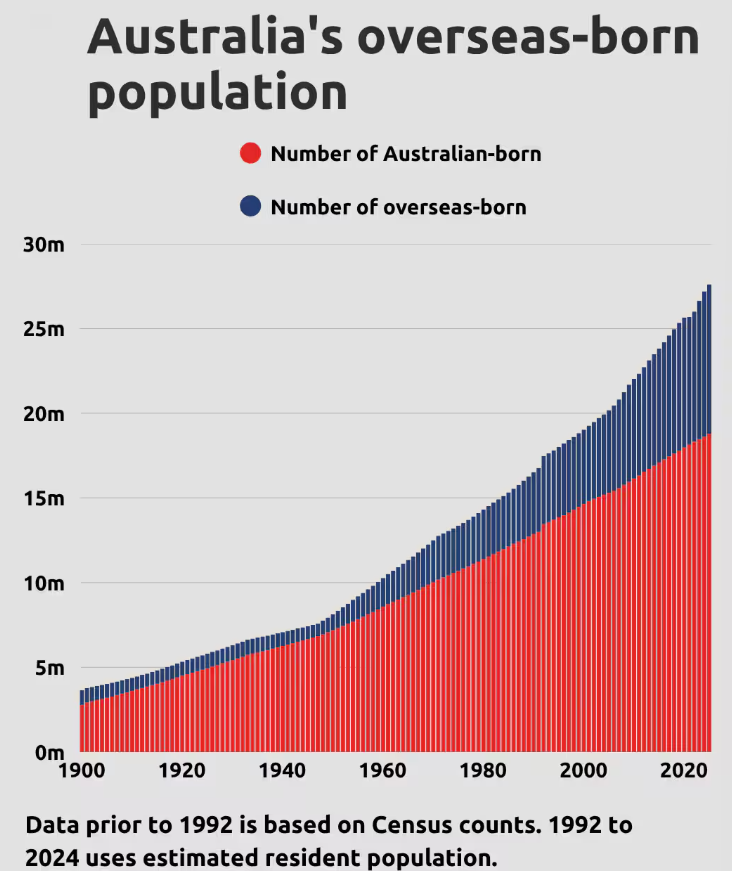
New Australian Bureau of Statistics data shows that the country’s estimated resident population on 30 June last year was 27.6 million, comprising 8.83 million people born overseas.
Over the past decade, Australia’s population has grown by around 3.8 million, up from 23.8 million in 2015.
The proportion of residents born overseas has reached 32 per cent of the overall estimated population.
The last time the proportion was that high was in 1891, reflecting high levels of late-gold rush era migration.
Those levels fell sharply during severe economic downturns, hitting a low of 9.8 per cent in 1947, from which it has climbed ever since.
Where is everybody from?
Of the 8.83 million born overseas, 971,020 were born in India, a country that has seen an increasing proportion of migrants over the past four years.
An estimated 970,950 people were born in England, making 2025 the second year in a row that has seen an increase in migrants from this country. Over the past decade, migration from England has been steadily falling from a peak of just over a million in 2013.
The third largest group of non-Australian-born residents were those from China, made up of 732,000 people. This is another peak in Chinese-born migrants, which climbed by 32,000 people from its previous 2024 high.
New Zealand migrants are the fourth largest population group, increasing from 618,000 in 2024 to 638,000 in 2025.
Indian-born residents are now the largest proportion of the overseas-born population in Australia.
Finally, people from the Philippines round out the top five, with 412,530 migrants estimated in the country in 2025. This is a figure that has almost doubled since 2015.
The next most significant countries of origin for foreign-born residents are Vietnam, South Africa, Nepal, Sri Lanka, and Malaysia.
The ABS statistics show that people born in Italy and England saw the largest decreases in their populations since 2015.
Both groups have a median age of 60 or over, reflecting high levels of migration to Australia from these countries after World War II.
The median age for Australia’s overseas-born population is now 43, down from 46 in 2005. By comparison, the median age of the Australian-born population is 35, up from 33 two decades ago.
 The Government will invest $85.2 million to improve the efficiency of skills assessments and accelerate occupational licensing pathways.
Key measures include:

The 2026-27 federal budget includes changes to the Working Holiday Maker (WHM) program designed to better manage visa numbers and make allocation fairer.
The main mechanism is an expanded use of ballots. Some WHM visa categories already use a ballot system to manage demand from high-interest countries. The government intends to extend this approach more broadly so that access is allocated more evenly rather than on a first-come, first-served basis.
The government says the changes are aimed at reducing barriers to work while better controlling overall numbers in the program.
 If you are interested in applying for a general skilled migration visa to Australia, it is important to have a good understanding of the skilled visa options and how the migration points test works, so that you can maximise your chances of being eligible to apply for a skilled visa.
The General Skilled Migration Program
A general skilled migration visa is an option available to skilled workers who are seeking to qualify for a skilled visa independently, or under a state or family sponsorship. It is an alternative to an employer sponsored visa.
One of the key criteria to qualify for a general skilled migration visa is the points test (a criterion that does not apply to employer sponsored visas). This is often the most challenging aspect for prospective skilled visa applicants to overcome when seeking an invitation to apply for the relevant skilled visa.
If you are considering applying for a general skilled migration program visa, an important concept to understand is the Expression Of Interest (EOI).
What Is An Expression Of Interest (EOI)?
If you are considering applying for a general skilled migration visa, it is important to be aware that for certain visas in this visa class, you will first be required to lodge an EOI with the Department of Home Affairs (the Department) through SkillSelect. The EOI is not a visa application, but rather, it is the process by which you can express your interest in applying for the relevant skilled visa (It’s important to note, that there is NO fee to submit an EOI).
This requirement applies to the following skilled visa subclasses:
Let’s take a brief look at each of these visas below:
The ‘subclass 189’ is a federal sponsored visa that grants automatic permanent residence in Australia. It is subject to nil visa conditions or obligations. For this reason, it is often considered to be the most flexible of the skilled visa options available.
A subclass 189 points-based visa allows you to live and work in any state or territory permanently.
The ‘subclass 190’ is a state/ territory sponsored permanent residence visa. It is another points-based visa for which invitations are issued throughout each month by individual states and territories. One of the benefits of applying for state nomination is that you will be granted an additional 5 points.
An important aspect to consider, which does not apply to the subclass 189 visa is that there is an added step in the application process. In this case, you must also apply for nomination approval to a state or territory government. Only upon receipt of an invitation from the relevant state or territory to which you apply can you then apply to the Department for the visa itself.
Your obligations as a subclass 190 visa holder are that you must commit to your nominating jurisdiction’s obligations and commit to residing in your nominating State or Territory for two years from visa grant.
Subclass 491 Skilled Work Regional (Provisional) Visa
The ‘subclass 491’ is also a points-based state/ territory (or family) sponsored visa. It is a regional visa with a term of five years. The Department issues invitations for family sponsored EOI applications only (in invitation rounds). Invitations for state sponsorship are issued by individual states and territories throughout each month. This will grant you an additional 15 points for the nomination.
Being a provisional visa, this means it provides a pathway to permanent residence in Australia with the Subclass 191 Permanent Residence (Skilled Regional) visa, subject to meeting specified requirements.
Be mindful that as a subclass 491 visa holder, you must abide by visa condition 8579, which requires you to live, work and study in a designated regional area of Australia. For migration purposes, most locations of Australia outside of major cities (Sydney, Melbourne, Brisbane, Perth, etc.) are classed as regional areas.
How Can You Receive An Invitation To Apply For A Skilled Visa?
If your EOI is successful, you will receive an invitation to apply for the visa, as specified in the invitation letter. This then enables you to proceed with lodgement of your visa application (provided you meet all other visa lodgement and visa grant requirements).
Please note, the below State and Territory program updates is a general overview only. It does not take into account any of your personal circumstances. You must check the State/Territory information carefully to ensure you can meet all the requirements for nomination.
Australia is currently facing a shortage of skilled migrants to fill workforce demands. In response, states and territories have been easing the conditions of their visa programs to help attract skilled workers from overseas.
Below is the monthly update for some of the State and Territory opportunities available.
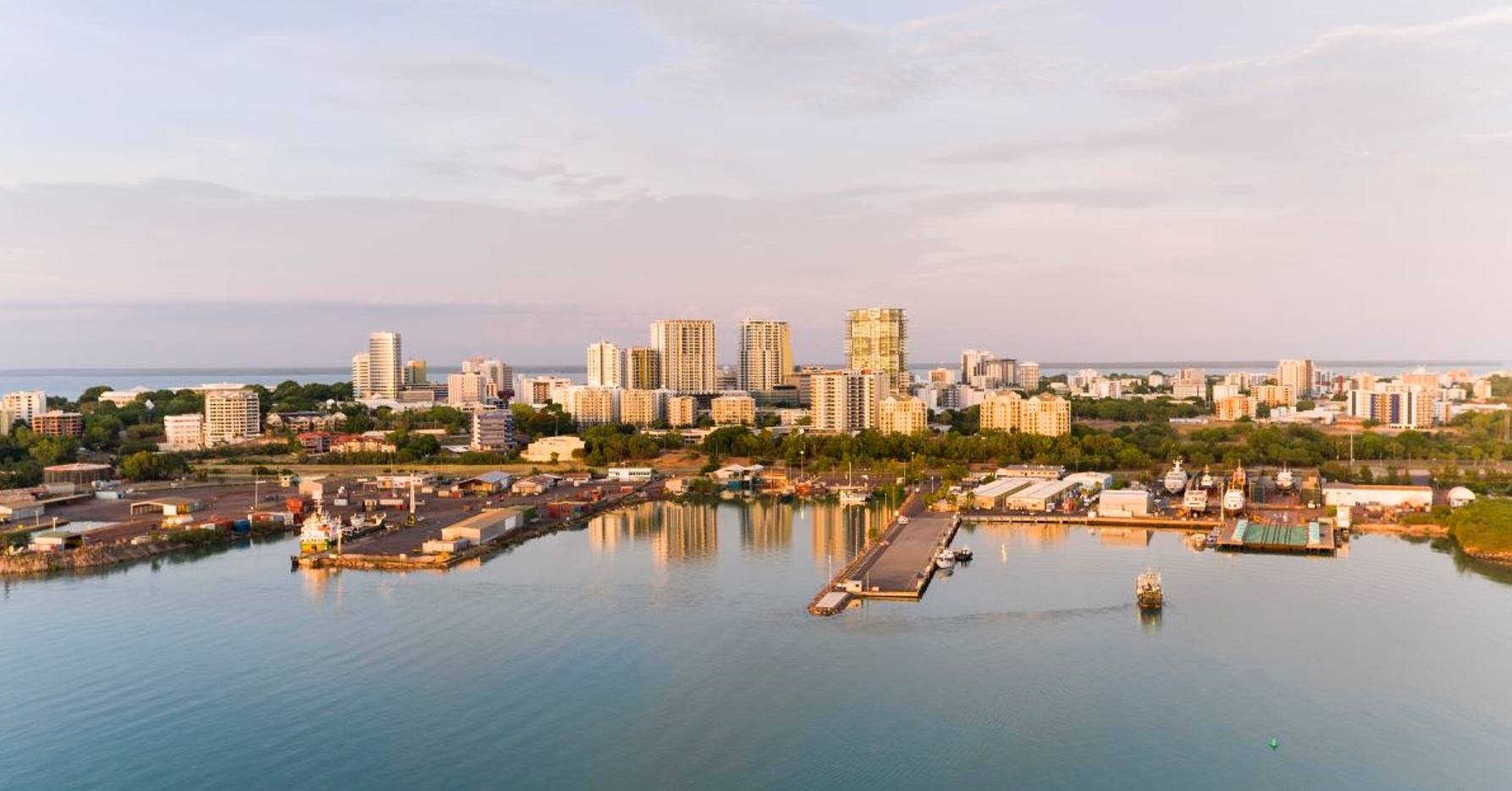
Program Status Update
The NT Government has now received sufficient applications to fully utilise its GSM nomination allocation for the 2025-26 program year.
As a result, the NT nomination portal is now closed to new applications. Applications lodged before the closure will continue to be assessed. Updates on assessment of applications will be provided through the online portal.
The nomination portal will reopen once the Australian Government confirms the NT’s nomination allocations for the 2026-27 program year. Please continue to monitor this website for updates.
Visa holders who are onshore and have imminent visa expiry dates should seek professional migration advice on their visa options and ensure that they maintain lawful status while in Australia.
People residing offshore are eligible to be considered for Northern Territory (NT) nomination. Invitations to apply for Northern Territory nomination will be via the ranking system.
The ‘Northern Territory Offshore Migration Occupation List’ identifies the occupations in current demand in the Northern Territory. This List is important if you want to apply for Northern Territory nomination for either a:
The ‘Northern Territory Offshore Migration Occupation List’ is only applicable for those applying for NT nomination from outside Australia, under the Priority Occupation stream.
Please note: The Northern Territory government has advised that offshore applicants will generally only be offered a Northern Territory nomination for a subclass 491 visa. Subclass 190 nominations will only be offered in exceptional circumstances, such as cases where the applicant has strong connections to the NT.
The NT advises eligible applicants to apply as soon as they meet the eligibility criteria. To receive a nomination from the NT Government, you must:
Before submitting an EOI for The Northern Territory, applicants should check that they meet all eligibility requirements.
For information on how to submit an application, view how to apply.
For a further explanation, see the Frequently Asked Questions page on the Northern Territory Government website.

Program Status Update
Program Status Update: Important Announcement
On 2 September 2025, the Australian Government announced the total number of places in its 2025-26 Migration Program. But it is still finalising state and territory allocations.
Queensland will not open the 2025-26 State Nominated Migration Program until our final program allocation is confirmed.
You can however submit your Registration of Interest (ROI) for Queensland nomination from 19 September 2025, in preparation for the program opening.
In the meantime, take a look here at which skilled visas and pathways might best suit you, including instructions for how to apply for Queensland nomination.
Once the above mentioned temporary suspension is lifted, you may be able to proceed with Queensland’s usual skilled migration program. Program details below:
Depending on your occupation and situation, there are two state nomination options available for skilled migrants through Queensland.
For Queensland state nomination, prospective applicants must meet the Department of Home Affairs requirements, state-specific occupation requirements and have skills in an occupation that is available on the Queensland Skilled Occupation List.
You may undertake employment once onshore in Queensland through:
Offshore applicants meeting the minimum published requirements are eligible to lodge an Expression of Interest (EOI) on Skill Select and then a Registration of Interest (ROI) on the Migration Queensland portal.
Migration Queensland criteria requires you to:
The 2025-26 Skilled Migration Program is open to both onshore and offshore applicants and provides pathways for skilled workers, graduates, and small business owners.
Before submitting a Registration of Interest (ROI) for Queensland, applicants should check that they meet all eligibility requirements.
Note: In the EOI, select ‘Queensland’ as the only state of interest in the EOI, if you wish to be considered for an invitation to apply for Queensland nomination.
For information on how to submit an application, view how to apply.
For a further explanation, see the Frequently Asked Questions page on the Queensland Government website.
 Program Status Update
Victoria’s 2025-26 state nominated skilled visa program is now closed to new Registrations of Interest (ROIs).
Victoria will continue to consider all submitted ROIs for the remaining nomination places in the 2025-26 program year.
If you withdraw your ROI, you will not be able to submit a new one until the 2026-27 program opens.
Information on the 2026-27 program will be published when it becomes available.
Once the above mentioned temporary suspension is lifted, you may be able to proceed with Victoria’s usual skilled migration program. Program details below:
Open to offshore applicants, the program provides skilled migrants with a pathway to permanent residency in Victoria. The skills that successful applicants bring to Victoria benefits employers and the broader Victorian economy.
The program provides two visa pathways:
As with previous years, applicants will first need to submit a Registration of Interest (ROI) and then be selected on competitive merit to apply for visa nomination.
*Please note: Invitation rounds occur frequently throughout the financial year with no set date.
To be invited to apply for Victorian skilled visa nomination, you must firstly make or update an Expression of Interest (EOI) via the Australian Government’s SkillSelect and then submit a Registration of Interest (ROI).
Both onshore and offshore applicants are eligible to submit a Registration of Interest (ROI) for both the subclass 190 and subclass 491 visas.
If you previously submitted an ROI in the 2024-25 and wish to be considered for invitation in the 2025-26 program, your ROI is still valid. You do not need to withdraw your ROI unless the information in the ROI has changed.
Your ROI will remain in our system for selection until it is withdrawn or selected.
You can check if your ROI is active via the Live in Melbourne portal. Login to your account > Applications > Click into the relevant NFR number > If active, the status will show ‘Submitted’ or ‘Received’.
Before submitting an ROI for Victoria, applicants should check that they meet all eligibility requirements.
For a further explanation, see the Frequently Asked Questions page on the Victoria Government website.
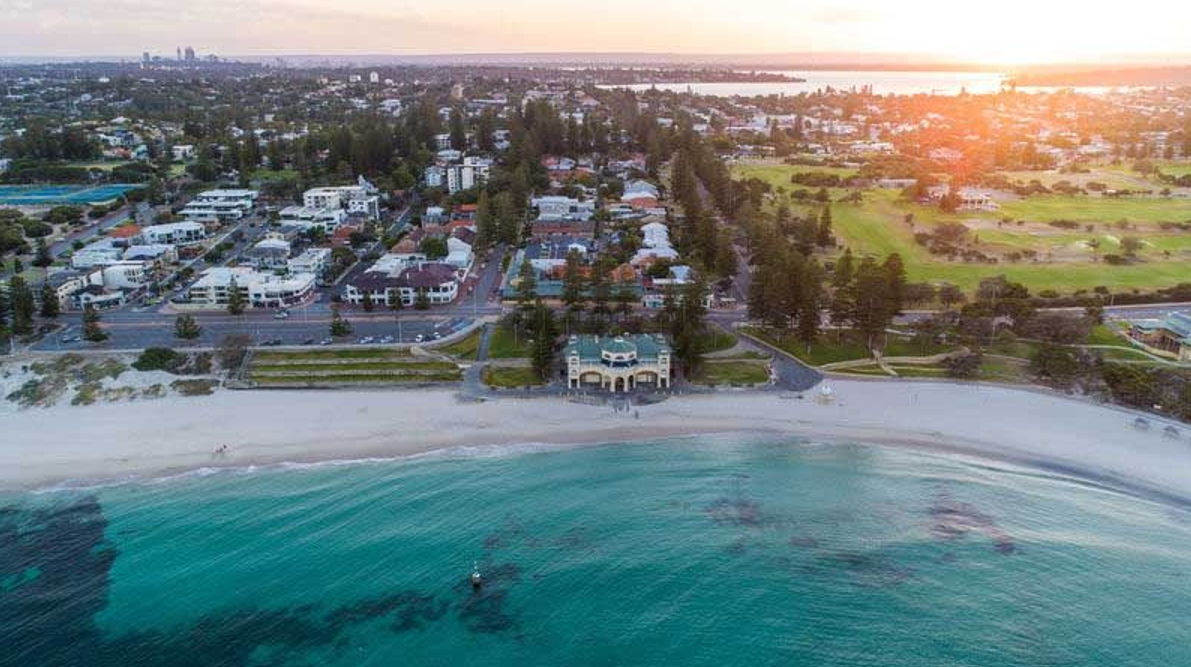
Program Status Update
*Western Australia (WA) 2025-26 Skilled Migration Program for OFFSHORE Applicants.
People residing offshore are eligible to be considered for Western Australia (WA) State nomination. Invitations to apply for WA State nomination will be via the ranking system.
The Western Australian Skilled Migration Occupation List identifies the occupations in current demand in Western Australia. This List is important if you want to apply for Western Australia nomination for either a:
Please note that to be eligible for an invitation in the WA State Nominated Migration Program, you must meet both:
Before starting your application, you will need to check whether your occupation is available on either the WA Skilled migration occupation list (WASMOL) Schedule 1 or 2, or the Graduate occupation list. You can search for your occupation here. (The occupation list search bar is located under the heading ‘Eligible Occupations’.)
Features of the 2025—26 program:
Before submitting an EOI for Western Australia, applicants should check that they meet all eligibility requirements.
For a further explanation, see the Frequently Asked Questions page on the Western Australia Government website.

Program Status Update
Australian Capital Territory’s (ACT) 2025-26 skilled visa nomination program (subclass 190 and subclass 491) is now open.
2025-26 Nomination Allocation: The ACT has received a final nomination allocation of 1,600 places for the 2025-26 program year.
The ACT Critical Skills List identifies the occupations in current demand in the ACT. This List is important if you want to apply for ACT nomination for either a:
The ACT Government will update this list every four months to make sure that the ACT Skilled Migration Program adapts and responds to the evolving critical skills needs of the ACT economy.
The Canberra Matrix is weighted to ensure that applicants who will make a positive economic contribution to the Territory and/or have demonstrated a genuine commitment to the ACT are more likely to be ranked and invited to apply for ACT nomination.
*ACT nomination does not guarantee a migration outcome. You must still meet the Department of Home Affairs criteria.
Every month, a certain number of nomination invitations are available (prorated on the annual allocation) to those working in the highest ranked Matrix in each occupation.
You can view the ACT’s most in-demand skills for skilled migration by consulting the ACT Nominated Migration Program Occupation List.
Before submitting an EOI for The Australian Capital Territory, applicants should check that they meet all eligibility requirements.
Once you’ve submitted a valid Department of Home Affairs Skill Select EOI, follow the ACT Government Process to apply for ACT nomination.
For a further explanation, see the Resources page on the ACT Government website.

Program Status Update
South Australia’s 2025-26 skilled visa nomination program (subclass 190 and subclass 491) is now open.
Depending on your occupation and situation, there are two state nomination options available for skilled migrants through South Australia.
For South Australian state nomination, prospective applicants must meet the Department of Home Affairs requirements, state-specific occupation requirements and have skills in an occupation that is available on the South Australian Skilled Occupation List. Offshore applicants meeting the minimum published requirements can now lodge an Expression of Interest (EOI).
There is an enormous range of occupations on South Australia’s Skilled Migration Occupation List in a range of industries – search for your occupation here.
South Australia will select offshore applicants to apply for state nomination from those who have submitted an Expression of Interest (EOI) through SkillSelect. Offshore applicants will not need to lodge a Registration of Interest (ROI) for this year’s program. South Australia will be nominating offshore applicants from over 250 occupations on South Australia’s Skilled Migration Occupation List.
If you are currently residing offshore and seeking to move to South Australia, the first step is to create an Expression of Interest (EOI) in SkillSelect ensuring you select South Australia as your first preferred State or Territory.
The South Australian Government can then review your EOI for consideration under the Skilled Nominated (Permanent) visa (subclass 190) or Skilled Work Regional (Provisional) visa (Subclass 491).
For most occupations, applicants must have a minimum of three years of skilled employment in their nominated or related occupation within the last 5 years to secure an invitation to apply for SA nomination.
To be considered for South Australian nomination, you must:
For occupations in the construction trades (as listed here) applicants must have a minimum of one year of skilled employment in their nominated or related occupation within the last 3 years.
Applicants in the construction trades will be assessed on merit by the following factors:
*Work experience must be in a role deemed full-time, defined as 20 hours per week according to SkillSelect.
Before submitting an EOI for South Australia, applicants should check that they meet all eligibility requirements.
For a further explanation, see the Frequently Asked Questions page on the South Australia Government website.

Program Status Update
Tasmania’s 2025-26 skilled visa nomination program (subclass 190 and subclass 491) is now open.
Subclass 190
Subclass 491
Migration Tasmania has now commenced weekly invitations to apply for nomination.
Information will be posted on the Migration Tasmania website every week detailing:
Program Changes and New Features
Following analysis of program outcomes and stakeholder feedback, updates have been made to improve the application process, clarify requirements and priorities, and manage program risks.
Key changes include:
Detailed information about the changes can be found HERE
Candidates who have submitted an ROI in the last six months may wish to withdraw it and submit a new one, as the changes to priority attribute ranking criteria may significantly improve chances of selection.
Processing times and remaining nomination quota are updated every week on the Migration Tasmania website HERE
Working in Tasmania
The two state nomination options available for skilled migrants through Tasmania are:
The Tasmanian State Nomination Skilled Migration Program supports Tasmanian businesses and increases the state’s working age population. It does this by attracting and retaining migrants with skills genuinely in need by employers, or with the capacity to settle in Tasmania through skilled employment in the long-term, and business activities that will increase employment opportunities.
Tasmania’s skilled migration program is for people wanting to move to the state who have skills that Tasmania need. Skilled migrants are attracted to Tasmania because of the state’s enviable lifestyle, career opportunities, affordable housing, reputable schools and a globally recognised university.
The Migration Tasmania Application Gateway is now available for registrations of interest (ROI) and applications for skilled visa nomination from Tasmania.
Anyone seeking Tasmanian nomination for a Subclass 190 Skilled Nominated Visa or Subclass 491 Skilled Work Regional Visa must first register in the Migration Tasmania Application Gateway .
Before submitting an ROI for Tasmania, applicants should check that they meet all eligibility requirements for either;
For a further explanation, see the Frequently Asked Questions page on the Tasmania Government website.
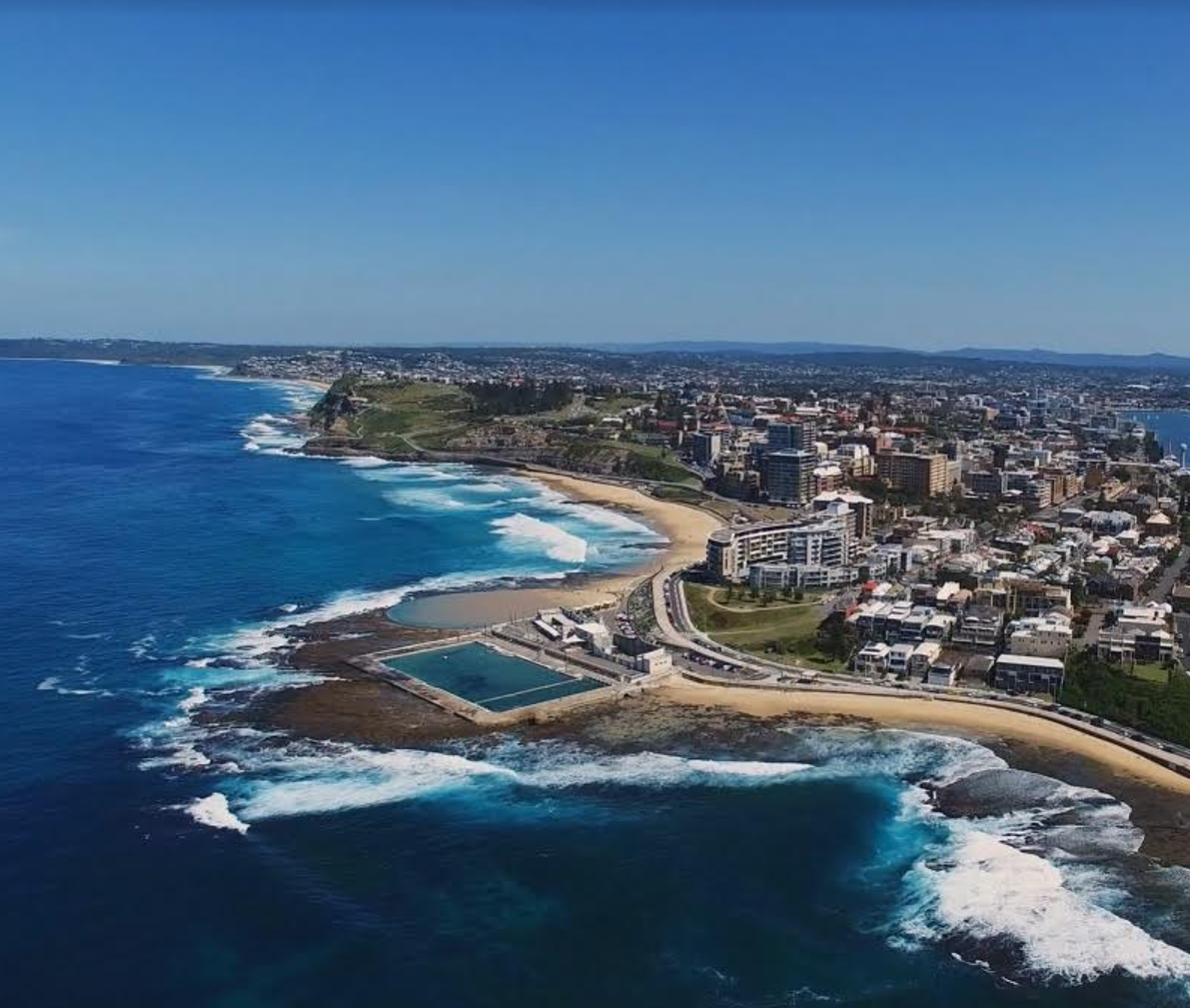
Program Status Update
Subclass 491 Pathway 1 and Pathway 3 are now closed to new applications for the program year which ends 30 June 2026.
Due to an overwhelming response, we have reached our allocation for the Skilled Work Regional visa (subclass 491) under Pathway 1 and Pathway 3.
Therefore, NSW have closed the application portals, and you will no longer be able to lodge an application under Pathway 1 and Pathway 3.
Applications that have already been submitted will be finalised, and there is no need to take further action.
For a further explanation, view the following page on the NSW Government website.
The New South Wales government has invited applications from offshore migrants under the following nomination streams:
The NSW State Government announced that offshore applicants skilled in certain ANZSCO unit groups are eligible for NSW nomination.
*Please note: Invitation rounds occur frequently throughout the financial year with no set date.
NSW invites and nominates SkillSelect EOIs at the ANZSCO unit group level. To be eligible for NSW nomination (for either Subclass 190 or Subclass 491), your occupation must fall within an ANZSCO unit group identified on the NSW Skills List which reflects skills in high demand across the state, and be eligible for the visa.
Before submitting an EOI for New South Wales, applicants should check that they meet all eligibility requirements for either;
For a further explanation of how the skills list works, see the Common questions about skilled visas page on the NSW Government website.

A long-term funding model for civil construction apprenticeships and traineeships is a crucial ingredient in developing the next generation of workers for a growing pipeline of infrastructure projects across the state, the Civil Contractors Federation says.
The industry body, which represents more than 500 contractors and more than 25,000 workers, has unveiled a list of priorities in the lead up to the state election, with skills and training front and centre amid growing concerns of a looming skills shortage.
Jessica Tucker, the new chief executive of the CCF’s South Australian arm, said increased investment in industry-led training, and stronger pathways into the industry, were also needed to bridge the gap.
“There’s definitely a concern around whether we have the labour and whether it’s also appropriately skilled,” she said.
“Looking at whether we can attract and retain women, Indigenous people, skilled migrants, and find a place for people in our industry, whether that be through our frontline workforce, whether it’s through administrative roles on sites, whether it’s through plant operations, we need all those skills.
“We’re very keen to make sure that we make the industry attractive to people, and if you look at it from a national perspective there is a huge amount of work nationally that’s also going on, and from a South Australian point of view we need to make sure we’re skilling our workers and then also retaining them in South Australia so we’ve got that capability into the future.”
She takes the reins at CCF SA in the midst of a infrastructure boom in South Australia, with major projects like the Torrens to Darlington project and new Women’s and Children’s Hospital fuelling fears of a major skills shortage.
Master Builders SA predicts the labour shortfall in building and construction will hit between 18,000 and 21,000 by the middle of 2027.
Last month the state government pledged $29m for a housing skills package aimed at creating 1000 new trade apprenticeships.
As part of its own plans to tackle the problem, the Liberal opposition announced a $10m program to provide a $10,000 bonus to South Australians who join the civil construction and residential building industries as an apprentice at age 21 or older.

Australia’s construction industry is booming. From major infrastructure projects and renewable energy developments to large-scale residential builds, the demand for skilled construction workers continues to grow in 2026. With ongoing housing shortages and rapid population growth, Australia urgently needs qualified tradespeople, engineers, and construction managers.
For overseas workers — including those from the USA, UK, Ireland, Canada and beyond — construction offers one of the strongest migration pathways to Australia. Many occupations are listed on skilled migration lists, and employer sponsorship opportunities are widely available.
This guide explains why construction workers are in high demand, which occupations are eligible, what visa pathways exist, and how to take practical steps toward building your construction career in Australia.
Why Construction Workers Are in High Demand in Australia
Australia is experiencing significant labour shortages across the construction sector. Several factors are driving demand in 2026:
Federal and state governments are investing billions into roads, rail networks, hospitals, renewable energy infrastructure, and defence projects. These developments require large teams of qualified workers across multiple disciplines.
Migration and natural population growth continue to increase demand for residential and commercial developments in both metropolitan and regional areas.
As a result, many construction roles are included on Australia’s Skilled Occupation List. Shortages exist in both major cities and regional areas, particularly for licensed trades and experienced supervisors. Construction is not just in demand — it is a sought-after and strategically important industry for Australia’s economic future.
In-Demand Construction Occupations for Skilled Migration
Numerous construction occupations are eligible for skilled migration in 2026. Some of the most commonly listed roles include:
Each occupation is classified under an ANZSCO (Australian and New Zealand Standard Classification of Occupations) code. Selecting the correct occupation is critical, as it determines your skills assessment authority, visa eligibility, and migration pathway.
For example:
Licensing requirements vary by state. Electricians and plumbers, in particular, must meet strict licensing standards before working independently. It is important to understand both federal visa rules and state-based regulatory requirements before applying.
Visa Pathways for Construction Workers
There are multiple visa pathways available to overseas construction professionals in 2026. Choosing the right one depends on your occupation, work experience, English level, and whether you have employer sponsorship.
This is a points-tested permanent residency visa. It does not require employer or state sponsorship. Applicants must submit an Expression of Interest (EOI) and meet points thresholds based on age, English, qualifications, and work experience.
This permanent visa requires nomination by an Australian state or territory government. States nominate occupations based on local labour shortages.
This provisional visa requires regional nomination (either state or family). It provides a pathway to permanent residency after meeting income and residence requirements. Regional construction workers often benefit from lower points thresholds and stronger demand.
This employer-sponsored visa allows construction workers to work in Australia for an approved employer.
This is a permanent employer-sponsored visa. Construction managers, engineers, and experienced tradespeople may qualify if supported by an eligible employer.
Temporary visas (such as 482 or 491) can provide valuable stepping stones to permanent residency. Given current shortages, employer sponsorship remains one of the most practical migration routes for construction professionals.
Skills Assessment & Licensing for Construction Workers
Before applying for most skilled visas, construction workers must complete a skills assessment.
For trade occupations such as carpenters, plumbers, and electricians, assessments are typically conducted through Trades Recognition Australia (TRA). This process may involve:
Professional roles such as civil engineers or project managers may require assessment through Engineers Australia or VETASSESS, depending on the occupation.
English language requirements also apply. Most applicants must demonstrate competent English through tests such as IELTS or equivalent, unless exempt.
Work experience thresholds usually require at least 1–3 years of relevant employment, though this varies by visa and occupation.
In addition to migration requirements, state-based licensing is essential. Electricians and plumbers must apply for registration in the state where they intend to work. Some workers may need gap training, additional exams, or supervised employment upon arrival.
Understanding both skills assessment and licensing processes is critical to avoid delays.
Construction Salaries & Working Conditions in Australia
Construction salaries in Australia are competitive and vary by role, experience, and location. Indicative ranges include:
Regional and remote projects often offer higher wages, allowances, and relocation incentives.
Australia also maintains strong workplace safety standards, regulated worksites, and union representation in many sectors. Compared to some overseas markets, construction workers often report favourable work-life balance and structured overtime systems.
Regional Construction Opportunities & Migration Incentives
Regional Australia presents strong migration opportunities for construction workers in 2026. States such as Western Australia, Queensland, South Australia, and regional New South Wales are experiencing rapid infrastructure growth and housing demand.
Benefits of regional migration pathways can include:
Regional employers frequently struggle to attract local labour, making overseas skilled workers highly valuable. For many applicants, regional Australia provides both faster visa outcomes and strong long-term employment prospects.

Multiculturalism is central to Australia’s identity, with more than half the population coming from overseas or having parents who did.
Most Australians view multiculturalism positively. However, many experience a declining sense of belonging.
In this context, cultural festivals present a valuable opportunity. They help remove barriers between different communities and build understanding across cultures.
We studied two cultural festivals in Sydney, the Africultures Festival and the New Beginnings Festival, to investigate the impact they had on communities.
Through interviews and surveys, we found cultural festivals are meaningful to the people they celebrate and enriching for non-migrants who attend them. These events help cultivate a sense of hope and optimism for Australia’s future as a multicultural society.
A chance for cultural enrichment
The Africultures Festival has been held each year since 2009. Led by a passionate all-women African-Australian committee, this event connects African communities with the broader Australian public.
The New Beginnings Festival is organised by the not-for-profit organisation Settlement Services International. It celebrates the diversity of migrant, refugee, multicultural and First Nations communities with themes of home, belonging, resilience and creativity.
Both festivals present unique opportunities for the general public to learn about different cultures and traditions. And for those whose cultures are being celebrated, they offer space to express one’s cultural identity and counteract negative stereotypes.
At the Africultures Festival, visitors can eat traditional foods, dance to African beats and even partake in African drumming workshops. As individuals from different backgrounds dance side-by-side, cultural barriers begin to dissolve.
The New Beginnings Festival features music, dance, visual arts, crafts and cuisine, celebrating the creativity and cultural heritage of artists and communities from diverse backgrounds.
As one attendee at New Beginnings told us:
‘You feel that you’re sharing your culture and art and your background in a new society and with new people. They will learn about it and experience the depth of the culture’.
Apart from appreciating different cultures, these shared experiences also help remind people of what they have in common. They do more than entertain; they promote cultural understanding and personal growth.
Community building and connections
For migrant communities, in particular, we found cultural festivals create three levels of connection.
Preserving ethnic roots
Festivals such as Africultures allow migrants to celebrate and showcase their cultural traditions and heritage. This helps strengthen their sense of belonging in Australia, allowing them to feel more “at home”.
One attendee at New Beginnings said:
It just makes you feel like you’re in your own country […] You stay in another part of the world, far away, but still you can have part of your country and part of yourself. So your identity is still there and many people see you.
Bonding between migrant groups
Gatherings such as New Beginnings bring migrants from diverse backgrounds together. Despite coming from different countries and cultural backgrounds, attendees can connect over the shared journeys of settlement and adapting to life in Australia.
One attendee at New Beginnings said:
because I’m an immigrant I have more similarities with them [other migrant attendees] and I feel attracted to them as we have gone through the same thing.
Bridging gaps with the wider Australian community
Cultural festivals help establish meaningful connections between migrant and non-migrant Australians. At Africultures, nearly all of the Africans we surveyed (96.7%) said the event left them feeling more positive about other cultural groups.
For non-migrants, the festival allowed them to feel more connected to people from diverse backgrounds.
One non-migrant attendee at Africultures told us:
I hope Australia can be a welcoming place for others. It is wonderful to experience other cultures and I hope that everyone can call Australia home.
Empowering entrepreneurs and artists
Beyond the wellbeing and personal growth aspects, cultural festivals also help migrants build their careers and businesses.
At last year’s Africultures Festival, we found nearly half the attendees spent more than A$75 at food and market stalls, directly supporting small business owners from migrant backgrounds.
Similarly, New Beginnings offers business owners and artists opportunities to showcase their work, meet potential customers and build professional networks.
Performers, too, highlight the career opportunities these festivals provide. One told us:
[Africultures has] given me the hope that I have a chance to expand my music to a whole lot of different audiences.
Such festivals have been stepping stones for notable successes. Yellow Wiggle Tsehay began performing at the Africultures Festival. Little Lagos, a Nigerian restaurant in Sydney’s Inner West, also got its start there in the form of a stall.
Shaping Australia
Cultural festivals are more than just celebrations. They are powerful tools for shaping a more inclusive Australia. By bringing people together to share their stories, food, music and traditions, these events help strengthen and connect communities.
The most impactful cultural festivals actively engage with and respond to the needs and aspirations of the communities they represent. They provide meaningful opportunities for cultural and ethnic minorities to share their experiences, ensuring their perspectives shape the direction of the event.
When festivals focus on these values, they become catalysts for a more united, inclusive Australia – one where everyone feels they belong.

A man has shared how he earned a six-figure salary for a job that took him one month to be qualified to do in Australia. He said the industry had no shortage of work and encouraged other Aussies and job hunters to get into the lucrative job.
The Canadian man was stopped in the streets of Brisbane and revealed he was earning $120,000 a year as a heavy machine operator. He shared that he didn’t need any licenses to get into the job in Canada, but did need to get “a bunch of tickets” to work when he moved to Australia.
“When I got to Australia it took me about a month to get all my certifications and then I was good to go,” he said.
“I had my own business back home. I sold my business to come live here and now I’m working here.”
The average salary for an equipment operator in Australia is between $75,000 and $90,000, according to SEEK. For heavy equipment operators, GlassDoor puts the average salary at $125,000 a year.
The man shared he moved from Canada to Australia to escape the bad winters.
“We don’t really work from November to March because everything freezes,” he explained.
“Most people either do snow plowing or some other kind of trade outside or they go on unemployment for the winter.”
The man said he would encourage other people to get into the job and said he hoped to get permanent residency and eventually open up his own business again in Australia.
“It’s a good industry to get into if you like to work with your hands, if you like to do challenging work,” he said.
“There’s no shortage of work so you’ll always be employed.”
Machine operators and drivers were among the occupations previously identified in the government’s Skills Priority List.
According to SEEK, formal qualifications are not essential to become a machine operator but you may need to hold specific licenses or tickets.
That could include a forklift license, which usually takes four days to get, along with a high-risk work licence from Safe Work Australia to operate heavy equipment.
High-paying jobs that don’t require a degree
There are a range of Aussie jobs paying six figures that don’t require you to get a university degree. Instead, many jobs will require a short diploma or TAFE course.
The Australian Taxation Office (ATO) recently revealed the best-paying jobs in Australia that don’t require a degree.
Here are the top 10:

Applying for an Australian Student visa can feel overwhelming, especially when there is so much conflicting advice online.
Many international students rely on information from friends, social media, or migration “hacks” on the internet that simply aren’t accurate. Unfortunately, following the wrong advice can lead to refused applications, visa breaches, or serious problems later on.
The reality is that Australia’s student visa system is more complex than many people realise, and understanding the facts is essential if you want to protect your future plans.
Here are some of the biggest misconceptions about Australian Student visas and what international students actually need to know.
In most cases, no.
Student visa (subclass 500) holders who are studying a Master’s of Coursework or below can work up to 48 hours per fortnight during study periods, and unlimited hours during official course breaks.
Master of Research and PhD Students are permitted to work full-time once their visa is granted.
Importantly, if a student works more than their permitted hours, it can lead to serious consequences, including visa cancellation.
Many students assume the Department of Home Affairs (DHA) “won’t notice” if they work extra hours.
Did you know DHA has the power to access Australian Tax Office (ATO) records? The hours you work, the tax you pay and the salary you earn may be provided to government agencies via your tax returns and payroll declarations.
Breaches of work rights can affect future visa applications as well.
It is common for people to forget they worked in breach of their visa conditions. A few years down the track, they may wish to use their work experience, skills assessments and visa applications. When an applicant is asked to evidence their claimed work experience, they may find they advised DHA or a skills assessor that they worked while on breach of their visa conditions in their recent application.
If you are unsure about your work rights, it is important to check your visa conditions carefully.
In short, no, it is not.
The truth is that while studying in Australia can help create future migration opportunities, there is no guarantee of PR.
Your long-term options will depend on factors such as:
Many students complete courses believing they will automatically qualify for permanent residency later, only to discover this is only the start of their migration journey.
Not understanding what steps you need to follow your course can lead to disappointment when students run out of time on their student or 485 visas. This is why planning early is critical.
Another common misconception is that you can simply add dependents to your student visa whenever you want.
If you hold a student visa (subclass 500), you may be able to add eligible family members to your visa, but family members should have already been declared in the original application.
If you wish to include a family member who was not declared in your original application, you will need to lodge a brand-new Student visa (subclass 500) to include them. This does not apply if the relationship began after your visa was granted.
Planning ahead is extremely important, especially for students with partners or children.
Not all courses lead to migration opportunities. Many students assume that any Australian qualification will automatically help them qualify for skilled migration later.
Before enrolling in a course, students should consider their education and career goals as well as their long-term migration strategy if they may wish to remain in Australia after study.
It is important to study what you enjoy with a view to your career. Migration rules and regulations change frequently; it is important to choose not only a course for a migration outcome. Not only will you not enjoy your study, but you might also have studied it for nothing if the occupation list changes.
Some qualifications may align with occupations on skilled migration lists, while others may have a less clear pathway forward.
Importantly, your Australian study may not be what you use for skilled migration.
A common misconception for international students is that their overseas work experience and qualifications are not valuable; these may be the key to migration while you study your new course.
Should you wish to stay in Australia after your studies, it is important to get advice early as to what your next steps might be and what, if any, skilled occupation aligns with your course, your previous courses or work experience.
Some students assume they can remain in Australia after their Student visa ends while deciding what to do next.
This is not correct.
If your visa expires and you have not applied for another visa, you will become unlawful in Australia. This can lead to serious consequences, including visa complications, re-entry bans, or difficulties with future applications.
If you plan to stay in Australia after your studies, it’s important to explore your options well before your student visa expires.
For many graduates, this may include the Temporary Graduate visa (subclass 485), employer sponsorship, or skilled migration pathways.

This is a compilation of the most recent data on the number of international students in Australia, including those in the post-graduate work stream, along with insights into the leading source markets.
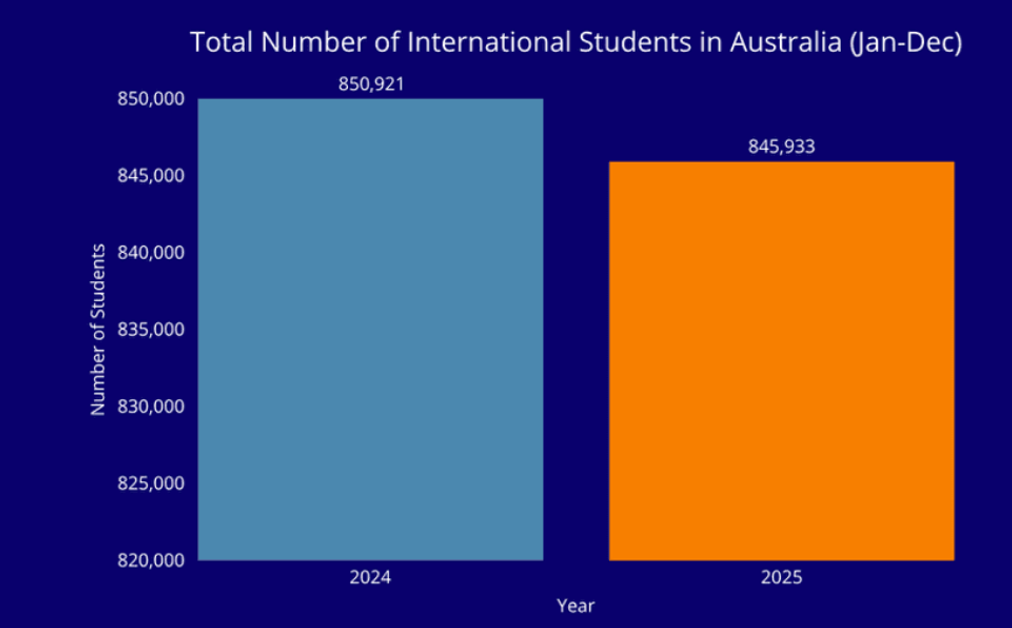
The number of international students studying in Australia totalled 845,933 for the January-December 2025 period, according to data from the Department of Education. There was a change of -1% compared to the same period last year.
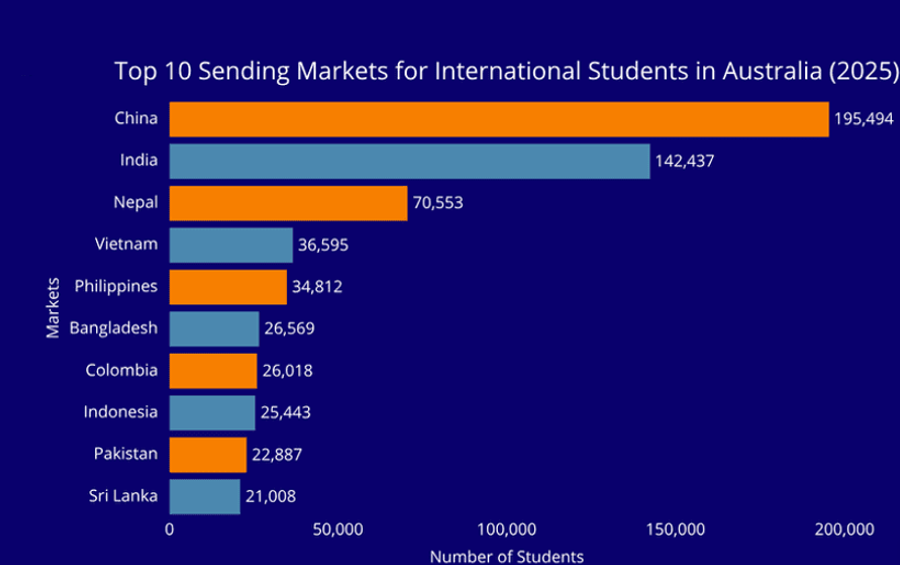
China remains the top sending market for international students in Australia, followed by India and Nepal.
 Economic value of international students in Australia
All expenditure by international students studying in Australia is recorded as an export in the Balance of Payments statistics published by the Australian Bureau of Statistics. This includes expenditure on tuition fees, food, accommodation, local transport, health services, and more, by international students while in Australia. In the 2024-25 financial year, this expenditure contributed AUD $53.6 billion to Australia’s exports (equivalent to USD $38.38 billion).
The Temporary Graduate Visa is for international students who have recently graduated with a degree from an Australian institution. It lets them live, work and study in Australia temporarily after they have finished their studies.
In the 2024-25 program year, the Department granted 126,348 Temporary Graduate Visas, an increase of 14.4% when compared with the same period in 2023-24 (110,468 visas granted).According to a report published by the Department of Home Affairs in the 2024-25 program year, the top five source countries for TGV grants were: India, Nepal, China, Philippines and Pakistan.